Automotive deep hole drilling covers unlike components. UNISIG’s automotive portfolio names steering racks, transmission shafts, diesel fuel components and crankshafts. It also describes modular machines, multi-spindle options and flexible loading. A production comparison needs to identify which combination is being timed.
Start with the part family
A round shaft and a component with several differently located passages need different feature maps. The source’s industry list is a starting point for identifying work, not evidence that one setup or cycle applies to every listed part.
Group a proposed production family by the actual blank and bore arrangement. Keep changes in access direction, datum and delivered condition visible. Similar external dimensions can conceal a different passage or an additional inspection requirement, so a shared handling tray does not itself establish a shared machining route.
Define what starts and stops the clock
Cutting time measures one part of the cell. Our comparison boundary includes handling or inspection whenever they keep the cell from starting its next workpiece. If a supplier reports a spindle cycle, keep that label rather than silently renaming it complete production time.
Multi-spindle equipment makes the distinction especially useful. A second spindle can be present without every part being processed simultaneously. Identify which operations are concurrent and which transfers remain sequential. The machine series description does not supply a matched production timeline or accepted-output history.
A completed cycle can still be held for inspection
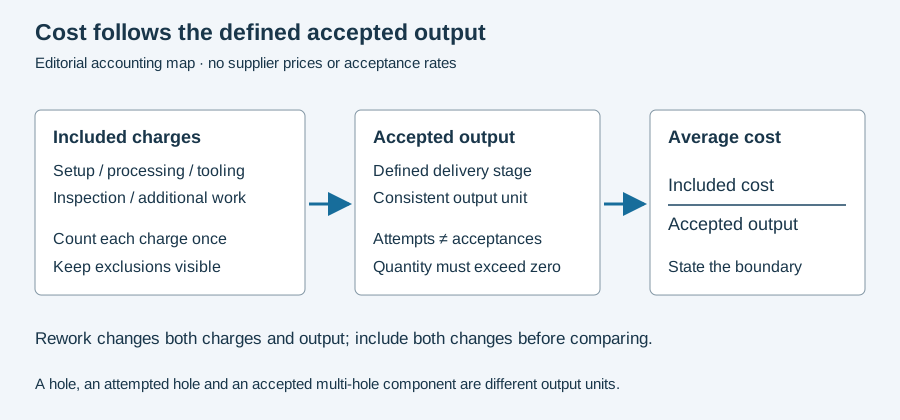
Record completed output and accepted output separately. A part awaiting a measurement or disposition has completed machining but has not yet contributed to released production. That distinction matters when converting machine hours into cost per accepted part.
Use a trial record that identifies where each sample lies in the declared tool-service interval. Fresh-tool observations alone cannot describe the later interval. Preserve interrupted workpieces and their disposition so that an apparently faster cycle does not erase unsuccessful output from the denominator.
Keep a changeover in the comparison
A modular machine may offer several configurations. Switching between them has a production boundary too: setup, first-piece inspection and resumed output. Attribute advertised capabilities to the supplier and use the proposed part mix to decide which changeovers matter.
The cost diagram and calculator below connect occupied time to accepted output. Enter measured or explicitly assumed quantities and compare identical delivery stages. Continue to production monitoring for the record across a run, or the EV page for why a rotor cooling-channel design needs a separate geometry decision.
Revision note
October 8, 2026: revised the technical explanation and connected reading after source review. Original publication date and URL retained.