Deep hole drilling for construction and mining equipment needs to identify the machined component. Drilling rock or forming a bore in the ground is a different task. A documented component example is the hydraulic cylinder: ECOROLL’s October 2024 explanation discusses cylinders used in construction and agricultural machines, presses and lifting equipment.
The piston interface explains the finishing task
The article relates cylinder bore geometry and surface condition to piston contact, fluid bypass and movement. It describes a process that combines cutting the internal surface with roller burnishing. This is a useful manufacturing example because it links the process to a named interface rather than simply claiming that heavy equipment needs precision.
The same explanation says its floating skiving arrangement follows the prior bore. An improved surface does not therefore demonstrate that an earlier centerline error has been removed. Preserve the incoming geometry when interpreting a finished-cylinder report.
Separate the tube from the rest of the assembly
Our application map assigns each report to its physical feature. The cylinder tube, external connection features and any other drawing-controlled passage should not share an undefined bore-quality label. A report on one surface cannot be extended to an unobserved feature elsewhere in the assembly.
If the incoming part is already hollow, the manufacturing question concerns enlargement or finishing rather than creating a hole from solid. That changes both the amount of material removed and the evidence needed about the incoming surface. Name the blank condition before comparing costs.
Plan access before assembly
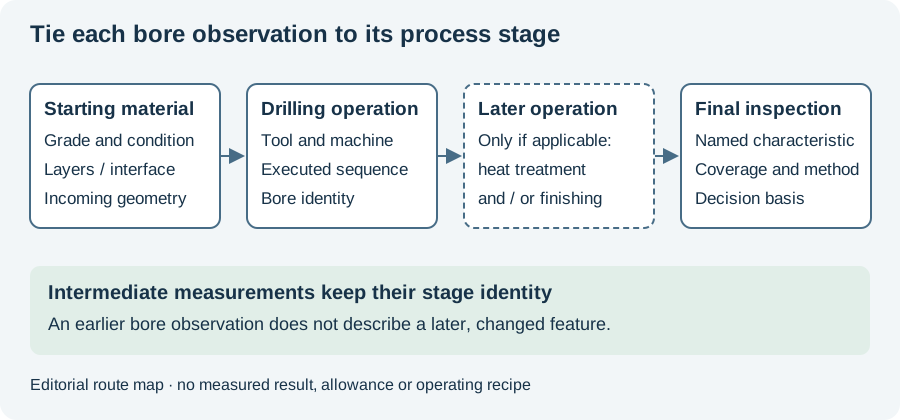
The inspection route should show which opening remains available at each stage. A measurement made before an additional assembly operation remains a valid record of that stage; it does not automatically describe the later assembly’s performance.
This distinction lets the machining discussion stay concrete without assigning a universal construction-equipment tolerance or a generic pressure qualification. Those acceptance requirements come from the actual component specification and its responsible designer.
A useful next step is the finishing comparison
The diagram below links material and incoming condition to machining and final inspection. Use the quality worksheet to identify the observed cylinder characteristics. Read the hydraulic-cylinder article for the tube-versus-solid distinction, then the SRB process page for what cutting and burnishing each contribute. Ground-drilling equipment searches should follow their own rock-removal sources rather than borrowing these metal-bore explanations.
Revision note
October 8, 2026: revised the technical explanation and connected reading after source review. Original publication date and URL retained.