Hydraulic cylinder bore manufacturing can begin with a tube or with a solid blank. The starting condition matters: finishing an existing bore is a different removal task from creating one. ECOROLL’s cylinder explanation describes enlargement, skiving and roller burnishing as distinct stages that can be combined in a tool arrangement.
Two mechanisms within the finishing route
Skiving cuts the internal surface. The subsequent rollers plastically reform its remaining roughness. Calling both stages polishing hides the different work they do. A route description should identify the surface entering each stage and the characteristics measured after it.
ECOROLL states that its floating skiving head follows the prior bore and cannot sustainably change prior bore-path deviations. This places an important limit on interpreting an attractive finished surface. It is possible to have an observation about local texture without establishing the required centerline relationship.
Read surface and geometry as different records
The original article discusses the piston interface and the desire for smooth movement. For a particular cylinder, however, the drawing must identify the required geometry and texture quantities. A roughness result should retain its parameter, sampled location and filtering information. It should not be rewritten as a general statement that all sealing or friction requirements have passed.
Our suggested record keeps local diameter, form, bore path and surface observations separately named. Where they refer to an external datum, include that reference. This lets a reviewer determine which part of the interface has actually been measured.
Preserve the incoming bore information
An existing tube supplies both material and an initial internal geometry. A solid blank requires an earlier hole-making stage. The cost and quality comparisons should retain that difference even if both proposals finish with the same surface requirement.
If preparation is supplied by another contractor, link its part identity and report to the finishing record. Otherwise a later defect investigation can lose the distinction between what arrived and what changed during the final operation.
Compare the delivered result
The source offers a supplier account of the combined process, not an independent matched comparison of every honing and SRB configuration. For a new job, compare routes against the same final characteristics and include preparation, transfer and measurement in the cost boundary.
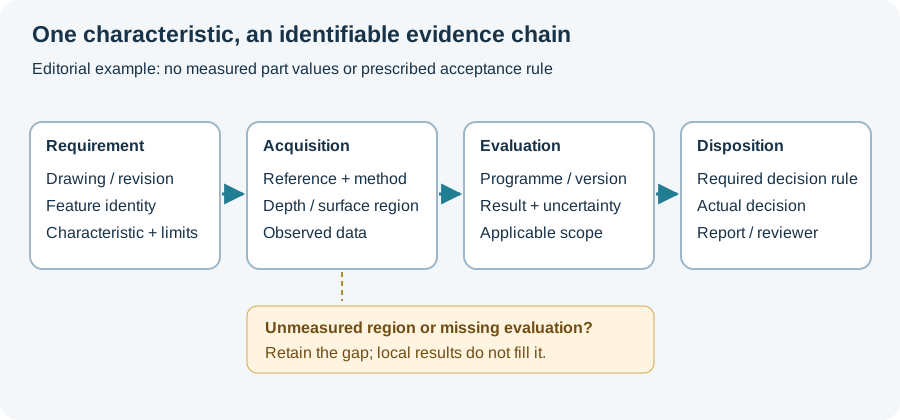
The measurement-chain diagram below and quality worksheet provide that record structure. Continue to SRB versus honing for the comparison fields, or bore straightness for how path observations differ from diameter and surface measurements.
Revision note
October 8, 2026: revised the technical explanation and connected reading after source review. Original publication date and URL retained.