Medical gundrilling includes instruments as well as implants. The UNISIG medical application page describes small-diameter and stepped instrument holes, their relationship to external features, and production alongside Swiss turning. These are machining examples; they do not establish biological or clinical suitability for a delivered device.
A stepped passage has more than one depth
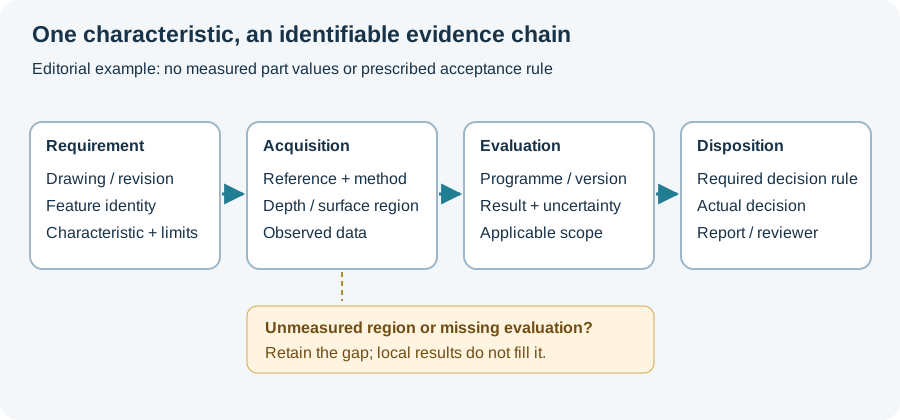
A stepped hole needs each diameter and its axial extent identified. A single maximum depth can hide where the transition belongs and what portion remains observable from the entry. Keep the feature drawing beside the inspection coverage.
Our suggested description distinguishes the hole’s entry, the transition and the deeper region. It also preserves the external reference used for a concentricity requirement. Measuring the opening alone cannot answer every relationship named in that drawing.
Production integration changes the record handoff
UNISIG describes robotic transfer between independent spindles and trays for irregular Swiss-turned blanks. The point for a cell review is to identify which workpiece moves, which operation is completed and which part identity follows the transfer. The presence of a robot does not turn every event into a final acceptance decision.
Where a second operation changes the feature, keep the first report as an intermediate-stage observation. Tool monitoring or broken-tool detection can inform the cell’s response, while the part inspection establishes a different kind of evidence. Avoid using those labels interchangeably.
Material and cleaning need their own scope
Preserve the actual material specification and incoming condition with the machining record. A portfolio’s reference to medical materials does not qualify every grade or subsequent treatment. Likewise, an internal dimensional report does not identify how cleaning, finishing or product-level validation was performed.
Assign those later stages to the route when they are actually part of delivery. This makes it possible to compare two manufacturing proposals without silently treating one contractor’s machining-only output as a complete validated device.
Instruments and implants deserve different reading paths
The implant page below uses named bone-screw and nail examples from another original manufacturer description. It asks a different question about what those component examples establish. The secondary-operation guide explains how an additional operation changes the inspected surface.
Use the diagram and quality worksheet to record the stepped passage, references and covered locations. The worksheet organizes machining evidence; it supplies no sterilization procedure or medical-device approval.
Revision note
October 8, 2026: revised the technical explanation and connected reading after source review. Original publication date and URL retained.