Public information about nuclear-sector deep hole drilling often stops at a supplier’s industry list. Dearborn Inc.’s gundrilling page includes nuclear among the sectors it serves. That supports an attributed statement about its market offering, not a conclusion that a particular reactor component has been qualified.
A sector listing and a component case are different sources
The Dearborn page describes off-center, angled and blind-hole capability. It does not identify a named nuclear drawing, a component acceptance package or its completed test records. Avoid filling those gaps with generic tolerances borrowed from another job.
The distinction matters when reading supplier claims about extreme length or precision. A capability may justify investigating an installation. It does not identify the material, feature and delivery evidence for the reader’s component.
A tubesheet example has a narrower, useful lesson
The historical TBT report describes two heat-exchanger tubesheets and a repeated hole pattern. It does not identify that job as a nuclear installation. Its useful lesson here is how a repeated-feature manufacturing record differs from a single long-bore record.
For a hole pattern, retain the individual feature identities and the map used to associate observations with them. A report for one sampled hole should keep that sampling scope. This is our editorial application of the case’s geometry, not a newly verified nuclear production result.
Connect subcontracted operations without losing identity
A delivered part may pass through drilling, finishing and measurement organizations. The controlled part identity, drawing revision and physical stage should connect their records. If an operation changes the observed surface, preserve the earlier report as evidence of its earlier state.
The contractual package defines which documents, observations and review decisions are required. A complete machining report can remain insufficient when another specified record is absent. This page does not assign a universal nuclear machining code or infer approval from a company logo.
Make the unresolved characteristic visible
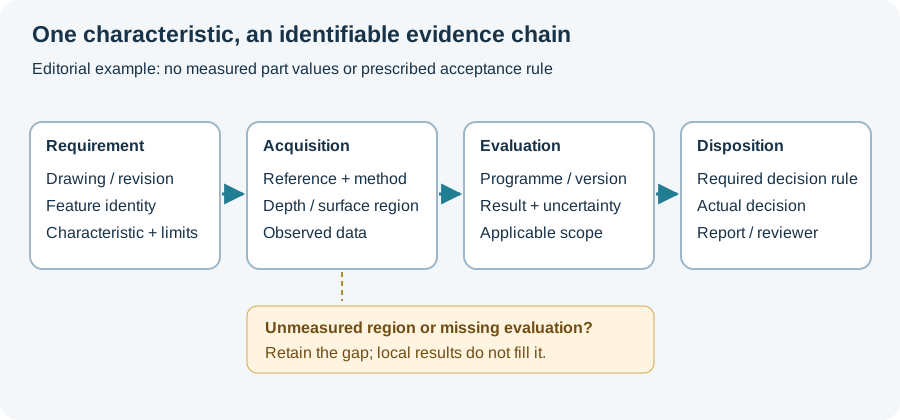
When the available observation covers diameter but not the required location or path, record that distinction explicitly. It is more useful than labeling the complete bore precise without describing what was measured.
The measurement-chain diagram below follows feature identity through observation and decision. Use the bore-quality worksheet to prepare the feature record, then read the historical tubesheet case for its production boundary or the measurement-report guide for how a reported number becomes a traceable result.
Revision note
October 8, 2026: revised the technical explanation and connected reading after source review. Original publication date and URL retained.