Oil and gas deep hole drilling can mean drilling a well or machining the equipment used around it. This page concerns metal components. UNISIG’s original industry description names drill collars, fluid ends, completion components and other workpieces, and distinguishes centerline from off-center drilling.
The passage’s purpose changes the feature map
Hunting Dearborn describes fluid passages and wireways, including MWD and LWD components. These examples explain why an oilfield part can have several internal features with different inspection questions.
A passage for a wire and a passage identified as part of a fluid arrangement should retain their separate drawing requirements. Do not give both a generic pressure or surface requirement merely because they occur in the same industry. Name the feature and its actual delivered condition.
Centerline and off-center jobs use different relationships
For a shaft-like part, an axial bore can be related to external features. For a fluid end with several passages, entry locations, directions and intended junctions become part of the map. A single overall length and diameter cannot describe the latter network.
UNISIG discusses positioning machines and compound-angle machining for fluid ends. This supports the distinction between a straight centerline job and a positioned passage job; it does not establish that every intersection is automatically observed or accepted.
Drilling may be an intermediate stage
The source distinguishes hole making from enlargement, bottom forming and internal profiling. Hunting also lists coatings, cladding and other subsequent operations within its services. A proposal should identify which of these stages it actually includes.
Keep the measured surface’s stage beside its report. A drilled-wall observation is not a later coated-wall observation. If a subsequent operation changes the geometry or access, retain both the earlier record and the required final evidence rather than relabeling the first as complete delivery.
Compare complete component routes
Material identity and incoming condition belong to each job. Supplier capability examples in demanding alloys are useful leads, while the controlled part and its accepted result determine a matched comparison. Costing should include the delivered scope rather than comparing a drilled opening with a finished, inspected component.
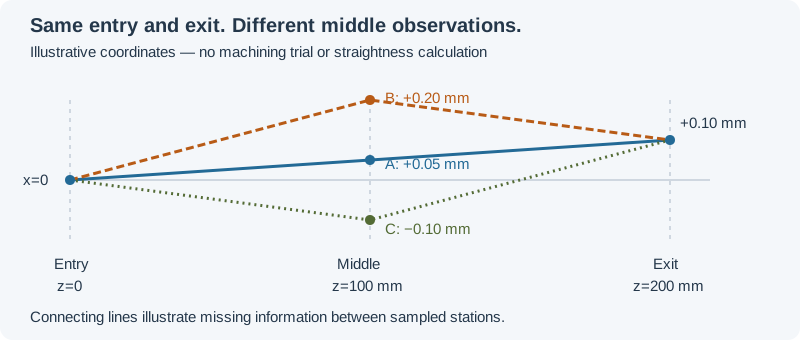
The coverage diagram below helps distinguish observed passage regions from unobserved junctions. The quality worksheet connects each region to the actual characteristic. Continue to cross-hole interruption for the machining transition, or internal profiling for how a straight opening becomes a specified bore contour.
Revision note
October 8, 2026: revised the technical explanation and connected reading after source review. Original publication date and URL retained.