A longitudinal railway axle bore can provide access for later inspection. Bahntechnik Brand-Erbisdorf’s German description says the hollow bore permits inspection from inside with a lance while the wheelset remains installed. This is a specific stated purpose, not simply a general claim about reducing shaft weight.
Access is part of the feature’s purpose
The source links the longitudinal bore to the ability to perform periodic examination without removing and dismantling the wheelset. It does not provide a universal bore diameter or machining recipe. For a manufacturing review, preserve the actual drawing and the access needed by the intended inspection arrangement.
A bore inspection plan can then distinguish dimensions and relationships from the later material examination. Passing one set of observations does not silently establish the other. A dimensional report and an examination for material defects describe different characteristics.
Axle machining and wheel maintenance are separate tasks
SAFOP’s machine-range page lists axle lathes for roughing, finishing and drilling, alongside machines for wheel reprofiling. The distinction prevents an equipment comparison from combining unlike capabilities just because they serve rail transport.
For an axle job, identify which external features establish the specified bore relationship and at what machining stage. For wheel maintenance, the access and workpiece assembly state are different. The industry name should not erase those physical differences.
Read qualification claims by scope and date
Bahntechnik’s page lists several qualification categories and linked documents. Their subjects and dates differ. This article uses the page’s stated purpose of the longitudinal bore; it does not determine the present validity of every qualification linked there.
When qualification evidence is needed for a particular purchase, the applicable document, site, process and validity period require their own review. A website heading or an old certificate label cannot replace that review. Keep the machining observation separate from the supplier-qualification decision.
Map the observation along the actual bore
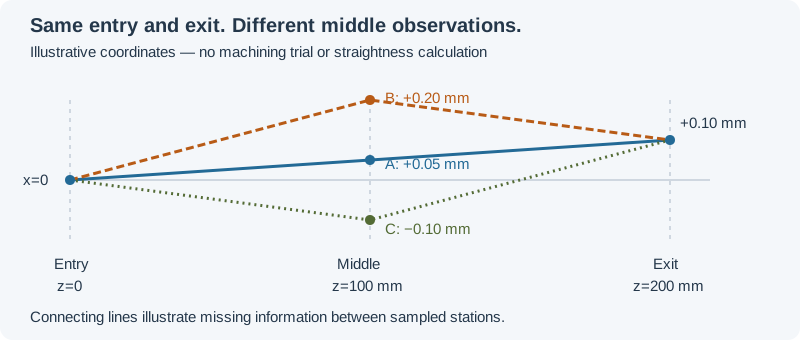
Our suggested coverage record attaches axial locations and external references to each measurement. If only part of the bore has been measured, show that extent. If the report concerns material examination, name its method and covered region instead of describing it as a diameter result.
The coverage diagram below and quality worksheet help keep those records distinct. Continue to bore straightness for the geometric path question, or the measurement-report guide for preserving feature identity, covered locations and the decision made from the observation.
Revision note
October 8, 2026: revised the technical explanation and connected reading after source review. Original publication date and URL retained.