Medical implant deep hole drilling has identifiable component examples. Precihole’s original application page names bone screws, femoral nails and tibial nails alongside surgical instruments. It discusses slender titanium and steel workpieces. These are supplier-described machining applications, not clinical outcome data.
Keep the component name with the claim
A listed bone screw and a listed surgical instrument are different articles even when both contain a long internal opening. The intended feature and external references come from each controlled drawing. A supplier’s general medical portfolio does not establish one universal bore specification across them.
The page contains capability figures, but it does not give a single matched test in which every advertised size, material and ratio is simultaneously demonstrated. Those figures should retain their original scope rather than being assembled into a new performance envelope.
Describe the observed wall and its location
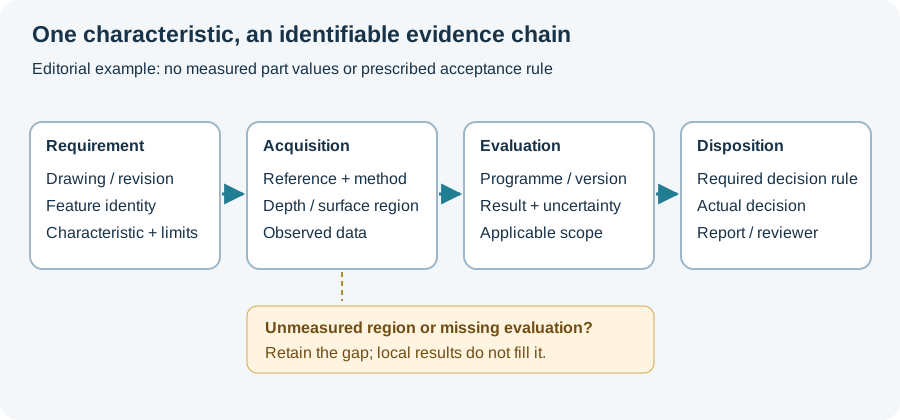
Our suggested implant machining record identifies the bore region, actual material condition and surface stage. A local texture or diameter observation should name where it was obtained. If a requirement concerns a relationship to an external feature, preserve that reference as well.
This makes the report more useful than a statement that the component is precise. It shows which physical characteristic was observed and leaves another required characteristic visible when it has not yet been covered.
Later operations can change the inspected surface
When the agreed route includes finishing, cleaning or another stage, identify its place after drilling and the evidence required at delivery. An intermediate machining report remains attached to its intermediate stage. Relabeling it final would erase a physical change in the component.
Likewise, calling a material titanium does not identify its complete specification or establish biological suitability for an implant. Material selection, component validation and machining observations are separate records with different purposes.
Compare proposals at the same output stage
One contractor may quote a drilled workpiece while another includes additional finishing and measurement. Comparing their prices as equivalent implants would hide the delivery difference. Identify the common output and the included observations before evaluating cost or production time.
The evidence-chain diagram below and quality worksheet connect each feature to covered observations. Continue to the medical-instrument page for stepped bores and robotic transfers, or the titanium machining article for how a material-specific manufacturing result must keep its actual conditions. Neither reading substitutes a machining report for a device-validation decision.
Revision note
October 8, 2026: revised the technical explanation and connected reading after source review. Original publication date and URL retained.