“Brazed” is a construction description, not a universal instruction to regrind or discard a BTA head. Begin a service enquiry with the exact tool designation and its manufacturer’s permitted service.
Two descriptions that should not be collapsed
UNISIG’s construction article describes disposable brazed examples. The botek V38 catalogue, page 5, explicitly describes Types 17/18/20 as regrindable. Pages 50–51 list grinding arbors for identified types. These statements concern different supplied constructions; neither becomes a rule for every brazed head.
The useful enquiry is therefore “what service applies to this designation?” rather than “how many times can any BTA head be sharpened?” A fixed count would also need the actual remaining geometry and service criteria.
Define what comes back from the service
Distinguish a sharpened cutting element, replaced inserts and an inspected assembled head. Their delivered states are different. Keep the controlling drawing, service performed and inspection of the returned configuration with its identity.
An illustrative comparison could show a lower sharpening charge but omit setup or diameter verification. That charge cannot be compared directly with an offer for an inspected ready-to-run assembly. Ask which work is included before dividing the service price by a presumed number of holes.
Use actual accepted output in the economic comparison
Assign tool-service charges to the agreed batch boundary and retain actual accepted output. Do not assume that a serviced head’s next batch will repeat a prior tool’s life or bore results merely because the process name is unchanged.
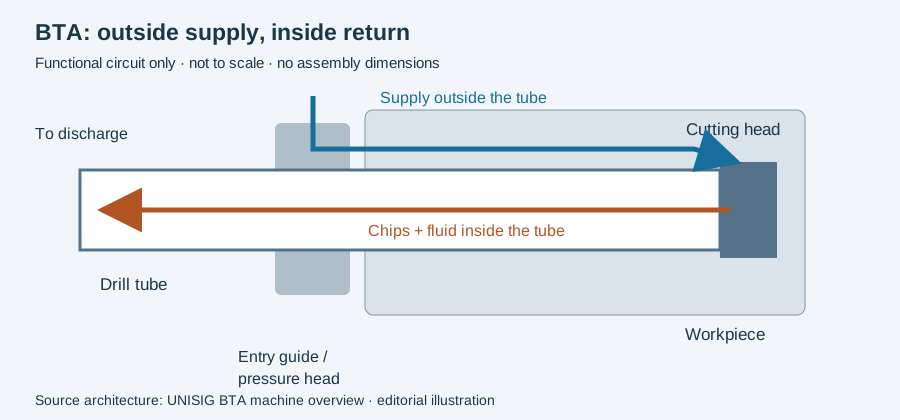
The BTA circuit sketch below locates the serviced head within the complete tool train. Use the RFQ worksheet for the service scope; continue to construction differences and batch cost for the two separate decisions. This article provides no grinding angles or pass sequence: those require the actual tool’s service documentation.
Revision note
October 8, 2026: revised the technical explanation and connected reading after source review. Original publication date and URL retained.