An automated loading sequence can move a component successfully without establishing that its bore meets the drawing. A useful BTA automation review follows both the physical part and the evidence associated with it.
Identify which functions are automated
UNISIG’s machine-automation description distinguishes conveyors and walking-beam handling. Its German automation discussion describes a unified cell-controller interface. These are offered handling and control functions; the descriptions do not establish an inspection method for every bore characteristic.
Keep loading, machining, tool service and inspection as separate steps in the proposal. Ask where the next step receives the part identity and what event allows that step to proceed. A shared operator screen is not itself the measurement evidence for a bore.
A record-flow example
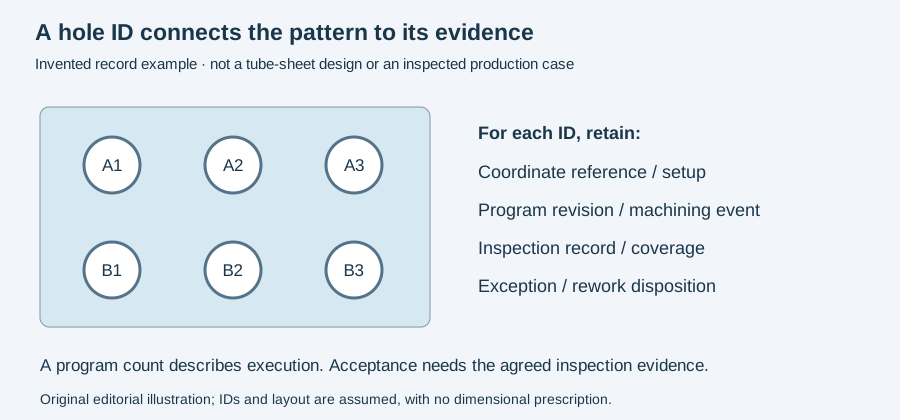
In an illustrative six-hole part, the program completes A1 through B3. The record map below retains each hole’s setup, machining event and inspection reference. If B2 is interrupted, its exception must remain attached to B2 after the part moves to another station. An aggregate cycle count loses that distinction.
Define the identity used for a part, batch and individual hole before evaluating the cell’s data package. Preserve program and setup revisions where they affect that package. The example is record design, not an assertion that a named supplier delivers such a six-hole cell.
Decide what a completed cycle actually means
Distinguish completed execution, recovered operation and accepted delivery. If an in-process signal is used to infer a characteristic, retain its demonstrated relationship to that characteristic and the independent reference used to check it.
Use the quality worksheet below to define the measurement coverage and acceptance evidence. Continue to in-process quality monitoring when the proposal depends on signals; read machine data acquisition for the associated context. Handling automation and inspected component output can then be reviewed on their own evidence.
Revision note
October 8, 2026: revised the technical explanation and connected reading after source review. Original publication date and URL retained.