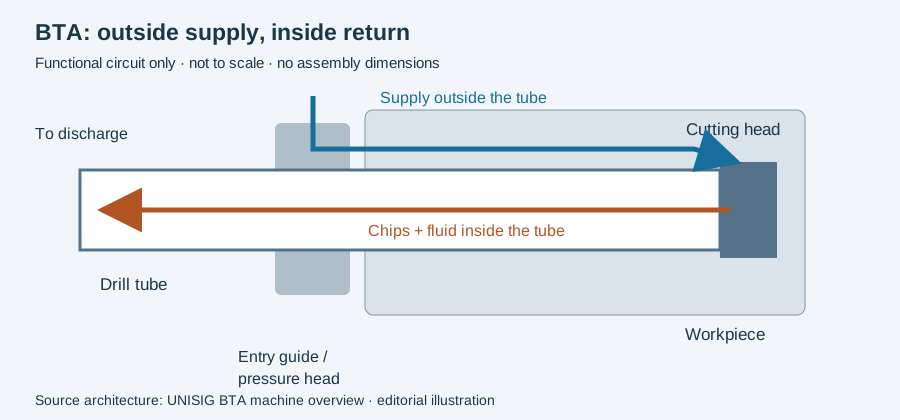
The BTA return carries fluid and chips back from the cutting zone. A coolant-system review should follow what happens to that mixture before fluid returns to the tool.
Solids handling, filtration and heat transfer are separate
Page 56 of botek’s V38 catalogue depicts chip handling, filtration, pumps and heat exchange as different system elements. The important reading distinction is their function; the drawing does not justify assigning one filter number or tank ratio to every installation.
A photograph of removed chips establishes that solids left one collection point. It does not characterize the smaller particles remaining in the supplied fluid. Likewise, a stated fine-filter rating does not document the complete chip-handling capacity or the operating temperature.
Put measurements around the actual arrangement
Retain the sampling or sensor location, fluid identity and operating state with each observation. A clean-side sample, dirty return and pump outlet describe different points. Comparing their values without those identities can make an apparent system change impossible to interpret.
An illustrative investigation might report stable delivery during idle circulation but a changed discharge during cutting. Preserve both observations and their times. They do not represent the same fluid demand and solids input. Locate the event on the circuit before interpreting it as a filter, pump or head problem.
Record the endpoint of a system change
If chip handling, a filter and a delivery setting all change, the resulting operation belongs to the combined configuration. State what was observed and separately retain final bore inspection. A recovered flow observation does not also establish improved texture or longer tool life.
Use the incident worksheet below for the timeline and changed components. Continue to filtration specification for the identified filter’s scope, or coolant investigation for pressure/flow measurement boundaries. The circuit sketch identifies supply and return, while the actual installation drawing identifies the separation equipment between them.
Revision note
October 8, 2026: revised the technical explanation and connected reading after source review. Original publication date and URL retained.