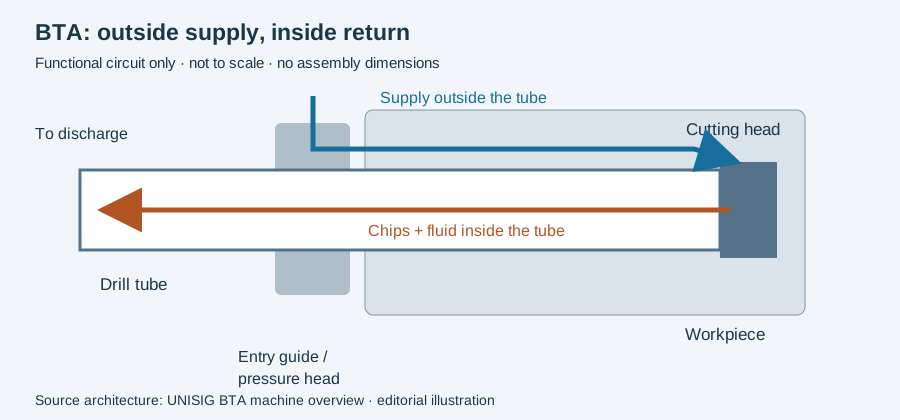
A BTA incident combines observations made at different points: the cut, tool train, fluid circuit, discharge and inspected part. A diagnosis should preserve those locations rather than treating every abnormal result as evidence of the same failure.
Put the observation on the installation
The UNISIG machine overview identifies entry guidance, pressure head, tube support, spindle and return. The circuit sketch below locates the outside supply and inside exhaust. An outlet observation occurs downstream of the cutting head and tube.
Record the symptom’s time, depth, part identity and operating state. A gauge reading taken after a stop and a chip observation during cutting remain separate observations unless their timing and relationship are established.
A recovery does not isolate every changed component
In an assumed investigation, changing a head, tube connection and fluid condition together restores discharge. The finding is recovered operation of the combined arrangement. It is not a controlled comparison proving that only the head caused the original symptom.
Retain the removed and installed designations with the authorized work performed. Keep hypotheses separate from actual findings. This lets a later reviewer see what was demonstrated and which question remains open.
Inspect the part on its own requirements
Recovered circulation or a familiar machine indication does not also establish bore acceptance. Record the relevant size, geometry and texture results, measurement coverage and remaining inaccessible regions. If the issue concerns a geometric deviation, its location and datum relationship must remain identifiable.
Use the incident worksheet below for the timeline and evidence. Continue to chip-transport failure modes for interpreting discharge observations, or geometry-deviation investigation for the measured part. This page is a diagnostic record framework; intervention sequences come from the identified installed equipment.
Revision note
October 8, 2026: revised the technical explanation and connected reading after source review. Original publication date and URL retained.