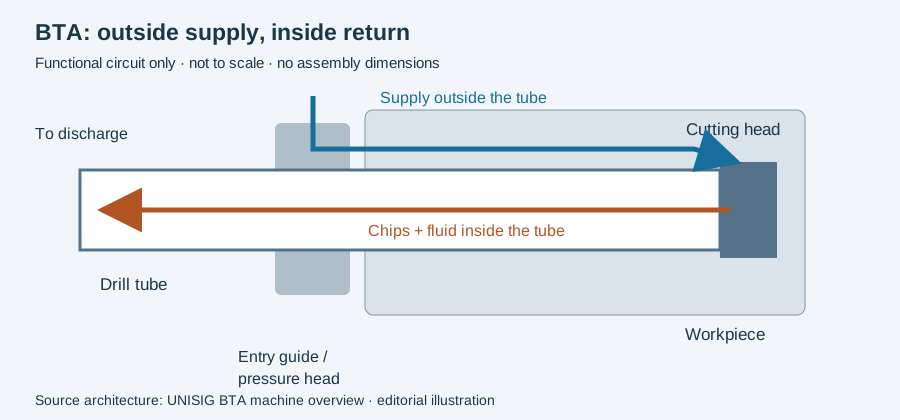
Describe each proposed BTA variation by the actual assembly and operating responsibility. Ask which interfaces, fluid arrangements and support conditions change from the baseline. Compare variants only against the same bore and delivery requirement. Do not infer interchangeability or a performance ranking from terminology that may describe different supplier-specific arrangements.
Classify the system by its fluid route and interface
UNISIG’s process descriptions distinguish external supply and internal return in BTA from the dual-tube arrangement in ejector drilling. The terms describe different assemblies, so a proposal needs the actual head, tube and entry arrangement before tooling can be compared. UNISIG ejector overview, UNISIG gun-drilling overview.
Do not treat an alternative name as proof that two components fit. Identify the connection and the assembly documentation for the machine being considered. A broad process family is less specific than a serviceable tooling bill.
Separate a tooling variation from a second operation
Drilling a solid blank, enlarging an opening and producing an internal contour should be named by their delivered operation. Keep any sequence change visible in the quotation and inspection plan. This page classifies the proposal without assigning universal performance differences. For ejector-specific selection, use the double-tube-system coverage rather than borrowing a single-tube setup description.
Read the incoming geometry for each variation
Solid drilling begins without the intended opening; counterboring begins with a bore to enlarge. Trepanning leaves a core. Pull boring is described by UNISIG as a pulled arrangement through an existing opening. These distinctions describe the work performed, rather than an accuracy ranking.
A route drawing should therefore show the part before each operation. If a proposal contains an enlargement tool but the supplied blank is solid, the preceding bore-creation operation is missing from that route. If the proposal includes a retained core, its removal and disposition need to be part of the job’s scope.
Where a process is selected to address geometry, keep the incoming geometric record and final inspection separate. Naming the variation does not establish which feature was improved or what remained unchanged in an actual part. Compare results at the same delivery stage, especially where secondary finishing follows.
Read tool task selection for the assembly question. Use method comparison when the question extends beyond variations on a BTA machine.
Revision note
October 8, 2026: revised the technical explanation and connected reading after source review. Original publication date and URL retained.