Alignment is a relationship between identified references. A statement that a BTA machine was “aligned” leaves unanswered which relationships were measured and what requirements governed them.
Start with the functional chain
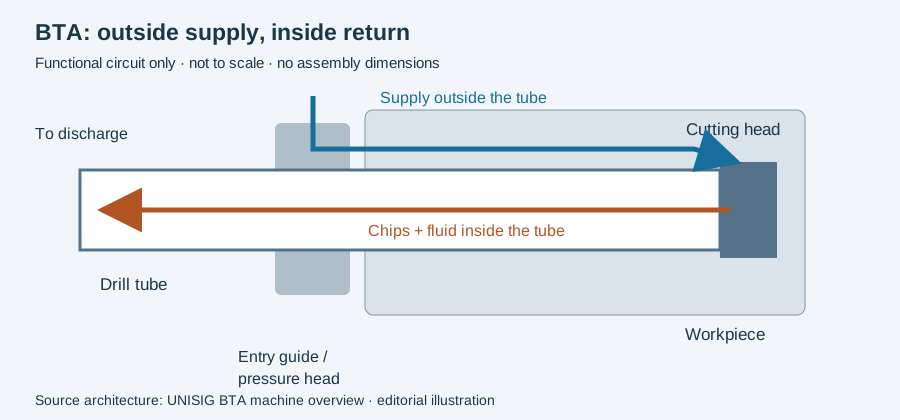
The UNISIG machine overview identifies the spindle, tube support and entry guidance within the installation. The circuit sketch below locates those functions. It is not a dimensional alignment drawing or an installation-tolerance specification.
Separate the spindle reference, supported tube arrangement, guide location and supplied workpiece datum scheme. A measurement describing one pair does not establish every other relationship. The actual machine and tool documentation must define the relevant requirements.
Preserve the measurement state
Retain the instrument, reference, location, units and configuration with each observation. Record whether the measurement concerns an unloaded assembly, a supported tool train or the proposed part setup. Results taken in different states should not be merged into one unexplained alignment number.
For an assumed review, a record may show agreement between a spindle reference and an entry guide but omit the workpiece’s actual datum setup. That finding can be useful while leaving the part relationship unresolved. It should not be renamed as proof of achieved bore straightness.
Connect installation verification to a component trial
An installation relationship and the final bore geometry are separate records. Define the trial’s supplied material, fixture, tool assembly and inspected coverage before interpreting the part result. If several setup elements change between trials, preserve all of them.
Use the RFQ worksheet to collect the proposed machine layout and component requirements. Continue to tube/connection specification when the installed tool train is unclear, or bore straightness for the distinction between geometric descriptions. The evidence should state what was measured, rather than treating one alignment check as a universal guarantee.
Revision note
October 8, 2026: revised the technical explanation and connected reading after source review. Original publication date and URL retained.