The three process names describe different supply and chip-return arrangements. They are useful for defining an enquiry when those arrangements are connected to the actual component and machine layout.
The circuit identifies the interfaces
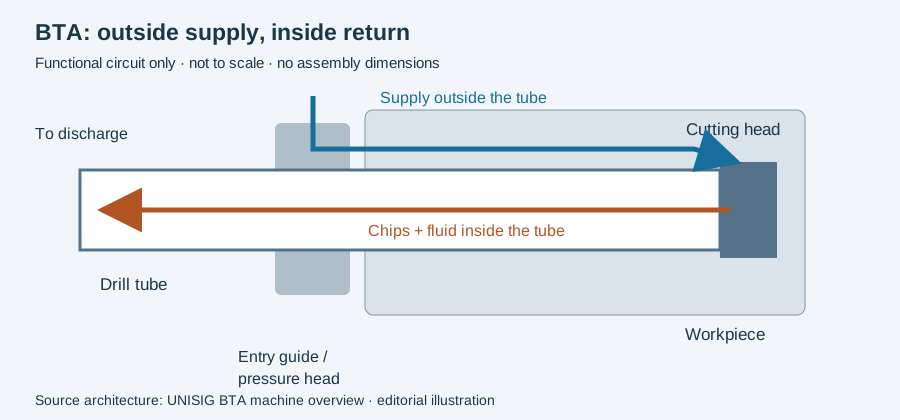
UNISIG’s application description separates gundrilling’s internal supply/external return from BTA’s external supply/internal return. The ejector process describes the double-tube arrangement and cites its own primary source.
The BTA sketch below shows the interfaces to identify in a single-tube proposal. For a different route, compare its own complete path rather than borrowing one subsystem specification because both processes are called deep-hole drilling.
Define one job before asking which process wins
Retain the supplied blank, material condition, bore dimensions, end geometry and datum requirements. If the task is enlargement or finishing, state the incoming bore. If the blank is solid, include the operation that creates the opening.
A nominal diameter may identify possible tool families. It does not document a complete connection, usable assembly length or inspected capability. Keep the proposed product designation and installation with any cited range.
Select the next question, then the next evidence
For an entry or workpiece-sealing question, review the proposed installation. For a delivered-geometry question, define measurement coverage. For an economic question, align included operations and accepted-output costs. A general process comparison cannot answer all three with one ranking.
An illustrative enquiry may contain two routes that both make the opening but include different finishing. Begin by making their delivery stages comparable, then assess the actual geometry evidence and charges.
Use the RFQ worksheet below to preserve that common job definition. Continue to the complete method comparison for additional routes or BTA/gundrilling economics for the cost boundary. The process name becomes a route description once its interfaces and endpoint are explicit.
Revision note
October 8, 2026: revised the technical explanation and connected reading after source review. Original publication date and URL retained.