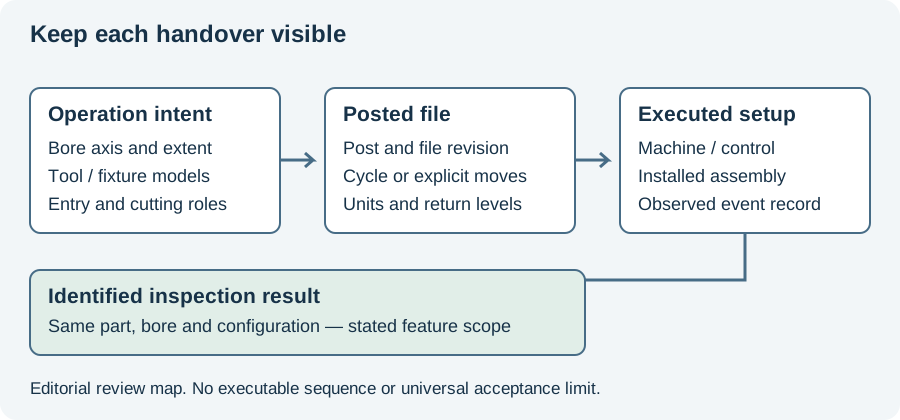
When CNC drilling behaves unexpectedly, locate the first event that differs from the approved sequence. An operator’s report that the cycle failed is a starting observation. It does not yet identify a CAM selection error, postprocessor change, controller interpretation or physical cutting fault.
Preserve three different records
Retain the intended operation, exact program that ran and observed machine event. Record the machine/control version and tool/setup identities with them. A later edited file cannot demonstrate the state of the original incident.
Fusion’s reference distinguishes built-in cycle output from expanded moves. If the emitted file differs from the expected form, determine whether the post deliberately changed its representation. A longer file is not automatically a malfunction, and a familiar cycle name is not proof of correct arguments.
Compare event by event
An editorial diagnostic sequence follows orientation, approach, guided entry, coolant activation, cutting, breakthrough and withdrawal. Use only the events relevant to the approved tool procedure. Identify where observed behaviour first diverged; later damage may obscure the original discrepancy.
For example, a lateral transfer at the wrong level is different from an incorrect incremental peck size. The Haas milling chapter documents return levels separately from peck behaviour. On that named control, the distinction points the reviewer to different arguments. It supplies no controller-independent repair or restart instruction.
Code agreement does not explain every defect
If intended and observed motion agree, retain that finding while reviewing the physical process. Link the bore’s inspection result to its tool, coolant observations and machining event. A surface defect alone cannot identify a wrong post, just as matching code does not establish an accepted surface.
Use the incident worksheet to keep observations separate from hypotheses and authorized checks. Preserve the original program, make a controlled revision when justified, and retain the changed configuration with the new result.
The diagram below places the investigation across the intent-to-execution chain. Continue to the cycle-reference page for document responsibilities, or the general drilling diagnostic framework when the evidence points beyond programming.
Revision note
October 8, 2026: revised the technical explanation and connected reading after source review. Original publication date and URL retained.