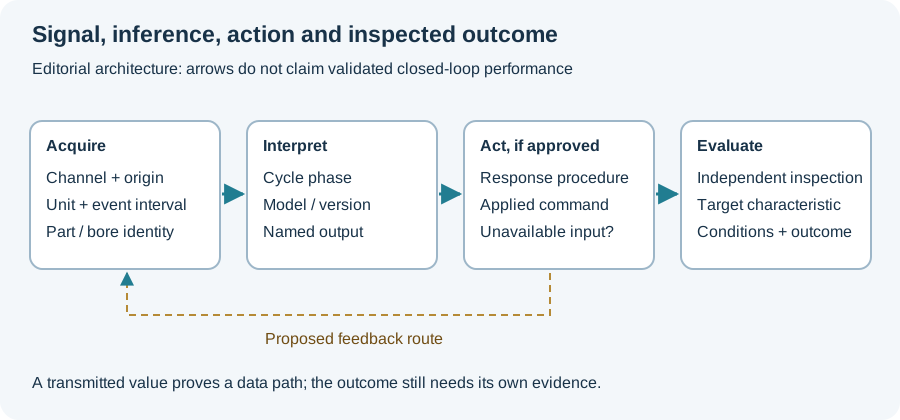
Deep hole drilling data acquisition becomes useful when a trace can be joined to the bore that was inspected. A machine timestamp alone may identify a period of operation without identifying the part, hole or cutting interval. Design the record around the question the analysis must answer.
Define an event boundary
An editorial record can link machine, job, part, bore, tool and program revision with the interval observed. Distinguish approach, cutting, interruption and withdrawal when the analysis compares those events. A mean calculated over the full cycle does not describe the same interval as a mean calculated only during penetration.
The umati machine-tool specification description covers monitoring and job information. That scope provides a context for integration; it does not guarantee a particular high-rate sensor stream or a supplied hole identifier on every machine.
Preserve signal origin
For each channel, retain its meaning, unit, measurement location, timestamp origin and sampling configuration. Label measured, controller-derived and calculated values separately. If two systems report load differently, identical column names do not establish that their observations are interchangeable.
The January 2026 ADC release states that pressure, flow and load observations support its regulation and that process data are recorded. An actual application should inspect what the export contains instead of inferring a complete dataset from that announcement.
Join on identity before correlation
Consider an editorial example: traces are labelled only by day, while inspection records are labelled by part and bore. A plotted association cannot show which trace belongs to the rejected hole until that join is resolved. Preserve unmatched observations rather than silently assigning them to the nearest convenient result.
Keep missing intervals and invalid readings visible. Replacing a gap with a normal-looking value can change a calculated trend without adding a real observation. Retain changes in sampling or mapping so comparisons can identify different acquisition conditions.
Outcome evidence remains separate
A proposed predictor needs comparison with independently identified inspection results for the same bores and characteristics. A dashboard trend alone does not establish defect cause or acceptance.
Use the incident worksheet to retain the event, physical result and hypotheses together. The feedback map below shows where analytics sits between acquisition and response. Continue to connectivity for the implemented interface contract, or process monitoring for the difference between detection and intervention.
Revision note
October 8, 2026: revised the technical explanation and connected reading after source review. Original publication date and URL retained.