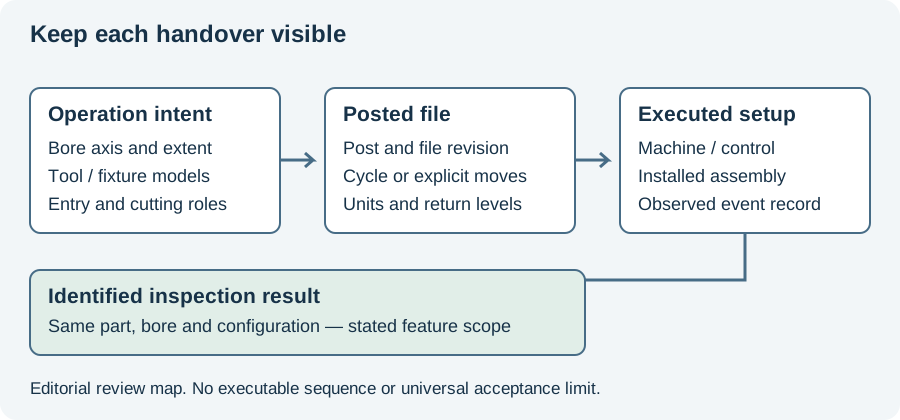
The useful question for an existing CNC is whether its complete installation supports the proposed bore. A machining-centre or lathe label supplies no universal depth limit. The tool assembly, loading space, fluid circuit and accepted result determine the application decision.
Travel includes the whole sequence
Compare part and tool lengths with loading, approach, drilling and withdrawal space. Identify which spindle or part rotates and which axis feeds. A nominal machining stroke does not include every clearance needed to load a long drill or move its holder away from a fixture.
Separate the pilot or entry-bush function from supports along the exposed tool. The linked gun-guidance article explains those roles. A fixture that holds the workpiece is not automatically a drill-entry guide.
A cycle does not provide a fluid circuit
The Haas milling manual documents peck and return behaviour. It does not establish the pump, holder connection or chip-return arrangement of a different installation. Review the selected tool’s supply and return paths, pressure/flow requirements and applicable entry/withdrawal procedure together with the builder’s fitted equipment.
For an ejector proposal, use the dedicated setup article rather than treating it as a gun drill with a different head. Its double-tube return arrangement introduces different installation questions.
Machine options can be process-specific
The January 2026 DMG MORI ADC announcement names initial machine families and supported controls for its technology cycle. That is evidence of a particular offered configuration. It is not proof that any standard CNC has sensor-driven coolant regulation or the same cycle available after a software change.
Record the actual machine, enabled options and tool procedure. A missing capability should remain an unresolved installation item until the complete proposal addresses it.
Establish output on the required bore
Plan the measurement of the specified size, path and surface characteristics with the proposed trial. Record the inspected result and accepted output for that setup. Neither a pressure rating nor a simulated cycle supplies those outcomes.
Use the RFQ worksheet below to bring drawing and installation information together. Continue to guidance or ejector setup according to the selected method; these paths answer different mechanical questions.
Revision note
October 8, 2026: revised the technical explanation and connected reading after source review. Original publication date and URL retained.