Swiss-lathe deep hole drilling needs a particular machine and tooling configuration. Bar capacity, tool count and the term Swiss-type do not establish the feasible bore depth. Start with the bore’s direction and the station that will perform it.
Workpiece guidance and drill guidance differ
Tornos’ Swiss DT description presents a modular machining area and operation with or without a guide bush. Its German page also describes an optional B-axis. These are manufacturer descriptions of configuration choices, not evidence of a demonstrated long-bore application.
The machine’s workpiece guide-bush arrangement must be distinguished from the pilot or bush that guides a selected drill at entry. Record the drill’s actual station, holder and projection. A supported bar does not by itself resolve the exposed drill’s guidance requirement.
Define the operation before comparing capacity
An editorial application review identifies axial or angled access, the rotating component, relative speed, feed direction, entry geometry and required depth. Compare those with the named station’s travel and full tool/part loading envelope. Do not substitute the advertised bar diameter for a drilling diameter range.
Review coolant delivery through the actual holder/tool connection and the selected method’s chip-return route. Published availability of a station or axis does not establish the flow reaching that drill. Keep the applicable tool procedure with the installation record.
Preserve identity across front and back operations
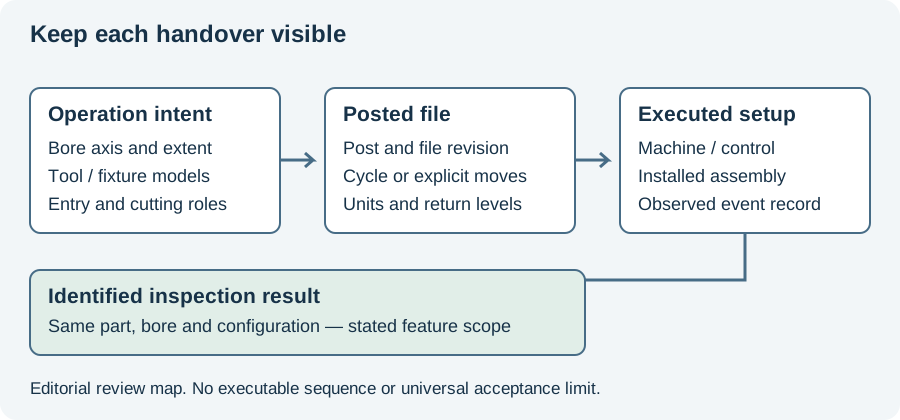
If the route transfers the part or completes features from another station, retain the orientation and bore identity at the handover. An editorial measurement plan should state which result belongs to each operation and which final drawing characteristic spans them. Two observations from opposite ends need a common reference before they can describe one bore’s path.
The public sources reviewed here provide machine configuration descriptions, not a verified Swiss-lathe depth ceiling, material recipe or cycle-time comparison. A proposed job still needs its own configuration and outcome evidence.
Use the RFQ worksheet below for that application description. Continue to existing-CNC feasibility for the installation review, or the quality article to define how the finished bore will be checked.
Revision note
October 8, 2026: revised the technical explanation and connected reading after source review. Original publication date and URL retained.