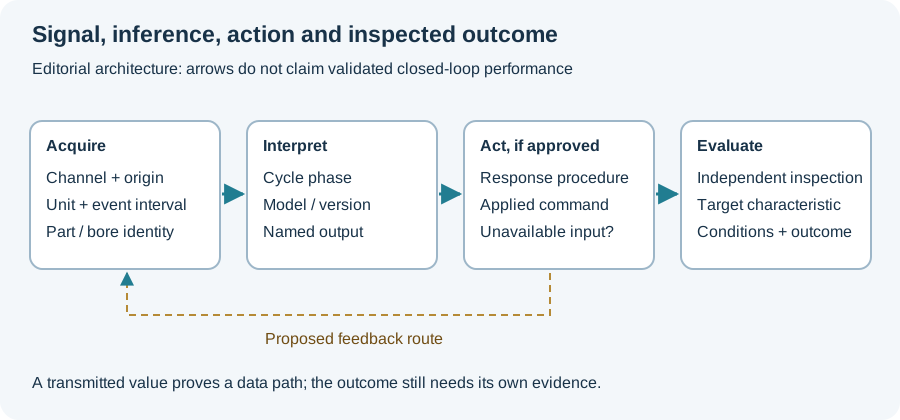
A connected deep-hole machine should be assessed by the information it actually exposes. Successful communication answers whether systems can exchange something. The application still needs to establish the meaning, identity and completeness of the data received.
Separate specification scope from implementation
The umati machine-tool description explains the OPC 40501 interface for monitoring and job information. It also describes version 1.02 job management as enabling bidirectional exchange that includes job data, NC programs and tool-management data. The interface scope therefore extends beyond a one-way dashboard description.
These published functions do not establish which facets, objects or transfer operations are present on a particular machine. Inspect the implemented interface and its version rather than treating every specification capability as an installed feature.
Test one intended use
An editorial integration review starts with a concrete task: for example, associate a machining event with a job and retain its observations for an incident investigation. List the implemented values needed for that task, their units, timestamp origins and unavailable-value states.
Keep machine identity separate from job, part and bore identity. A machine state such as running does not identify which of several holes was being cut. If the export lacks that association, record the gap and determine how the application will establish it.
A receiving system needs visible gaps
Compare a representative export with the originating machine event. Retain communication interruptions, invalid values and mapping changes. Where a receiving system calculates a value, preserve the inputs and calculation identity rather than presenting it as another sensor channel.
File exchange also needs a defined application role. Availability of an NC-file transfer interface is not evidence that a transferred program has been approved for the current tool and setup. The program-library article below addresses that separate configuration record.
Connectivity does not inspect the bore
Transported observations can support investigation and monitoring. The finished bore still needs the relevant measurement result, linked to the same feature. The information-model scope does not independently validate a quality predictor or supply an absent measurement.
Use the incident worksheet to check that an exported record can support a real event investigation. Continue to acquisition for time and signal provenance, or the program-library page when exchanging released files is part of the integration.
Revision note
October 8, 2026: revised the technical explanation and connected reading after source review. Original publication date and URL retained.