AI in deep hole drilling can refer to signal interpretation, an alarm, parameter selection or a machine action. Those functions need separate evidence. IFW’s April 1, 2026 AutoBohr completion report supplies a concrete monitoring example for single-part drilling.
The system first identifies the process phase
IFW describes a module that identifies stages such as air cutting, engagement and exit. A second stage evaluates process data, with a neural-network approach extending assessment to operations for which no historical reference is available. The report attributes the development to IFW and iba AG.
Phase identity matters because a signal change at exit can have a different meaning from a change during engagement. The article reports a trial at a contract manufacturer under production conditions, but provides no numerical confusion matrix or matched BTA deployment on this page.
Detection and intervention answer different questions
An alarm reports that the monitoring system recognized a condition. It does not, by itself, show which machine command followed, whether that command changed the process or whether the completed bore was accepted.
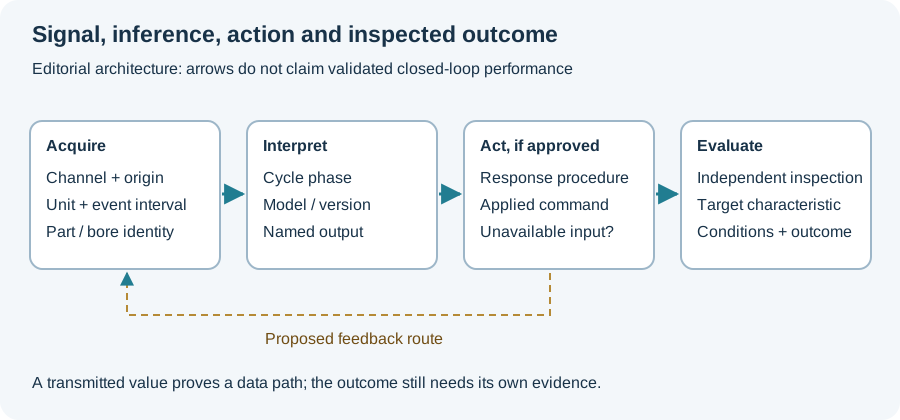
The feedback-stage figure keeps these handovers visible. Acquisition produces a signal; interpretation produces an assessment; an approved control arrangement may produce an action; inspection then checks the resulting feature. The IFW report supports discussing the monitoring stages, rather than inventing a closed-loop parameter controller.
Keep expected events beside the anomaly record
For an application evaluation, record the identified phase, selected operating configuration and actual event. A tool change, cycle restart or exit event should remain distinguishable from a fault. Our suggested comparison is to retain the system’s output and the independently identified event under the same timestamp or depth reference.
This makes an error interpretable. A missed event and a false alarm are different outcomes; a list containing only detected failures cannot establish both. The contract-manufacturer statement is encouraging source-reported deployment evidence, while the measurement of performance needs its own dataset description.
Bore quality remains another endpoint
A tool-breakage alarm can be useful even when it says nothing about roundness or straightness. Conversely, a finished bore can fail an acceptance characteristic without an alarm having been defined for that characteristic. Decide which task the monitoring system is intended to support before calling the result “quality control.”
Use the incident worksheet for a specific observed event, including the action and inspected outcome. Continue to the dated AutoBohr report for the completion announcement and to machine data acquisition for preserving phase, configuration and signal identity. These connections let the reader follow a real observation through the system instead of treating “AI” as a single capability.
Revision note
October 8, 2026: revised the technical explanation and connected reading after source review. Original publication date and URL retained.