ECM cross drilling requires an electrode and electrolyte arrangement that reaches the intended feature. The Electrochemical Society explanation describes the workpiece as the anode and the tool as the cathode. Material is removed through electrochemical dissolution, while electrolyte carries products out of the machining gap.
Flow and geometry belong in the same description
The encyclopedia explains why accumulation of machining products in the gap is undesirable and why electrolyte movement matters to the operating conditions. For a cross-hole proposal, this mechanism raises a specific geometry question: where does the flow enter and where can it leave near the junction?
An accessible opening is only part of that arrangement. The electrode position, intended intersection and the rest of the passage need to be shown together. This is an application interpretation of the mechanism; the general explanation does not itself test the reader’s cross-hole.
Material behavior is not reduced to hardness
The German Fraunhofer IKTS description discusses investigations of anodic surfaces and the influence of microstructure on dissolution. It includes work on metal–ceramic composites and metallic materials.
That research focus is a useful reason to preserve the actual material beside a feasibility result. Saying the process does not use a conventional cutting edge does not establish identical behavior across all material phases or a universal surface outcome.
Define the junction as an inspected feature
A cross-hole can raise questions about intersection position, local opening geometry and specified edge condition. These should be named separately in an inspection plan. A measurement along a straight passage can be valid while leaving the junction unobserved.
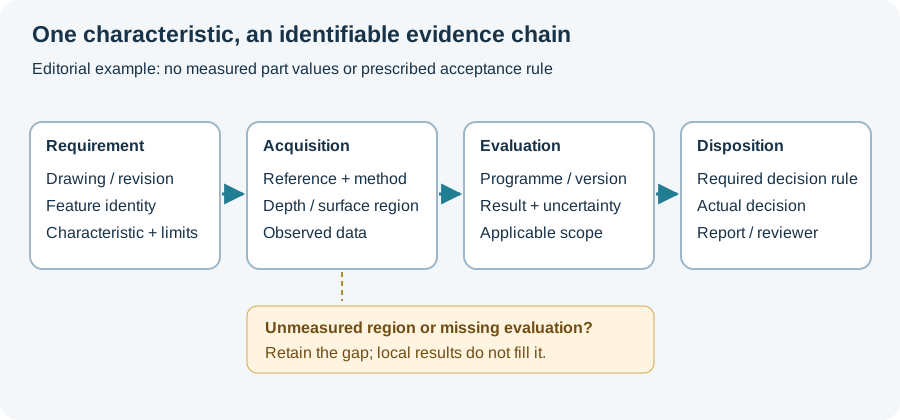
Our suggested evidence record links the feature identity to a coverage sketch. Mark where the observation was made and what it can distinguish. If a sample was sectioned, retain the section plane. If the view was optical, describe the available field of view. Neither label alone supplies complete junction coverage.
Keep the full delivered route
Preparation, electrochemical processing and any later cleaning or finishing belong to the route when they are actually included. A report from an intermediate sample should retain its stage identity rather than being relabeled as final acceptance.
The diagram below connects the characteristic to covered observations and a decision. Use the bore-quality worksheet to describe the junction and measurement coverage; it contains no electrolyte recipe or generic ECM tolerance. Continue to the ECM/EDM/laser overview for the different removal mechanisms, or secondary operations for how an additional stage changes the feature being inspected.
Revision note
October 8, 2026: revised the technical explanation and connected reading after source review. Original publication date and URL retained.