EDM and laser hole drilling describe different removal architectures. Makino’s hole-EDM page identifies an energized rotating tube electrode with high-pressure flushing for small deep holes in conductive metals. Fraunhofer ILT’s laser-drilling description identifies several optical drilling arrangements.
An electrode-drilling record needs the electrode and flushing path
The Makino description explains why a hole-EDM proposal should name the tube electrode and fluid arrangement. The process name alone does not describe the complete installation or establish the inspected wall condition.
For an application comparison, record the starting workpiece, intended feature and actual electrode operation. Conductive-metal scope belongs to the cited supplier description. A local result on one material should retain that material rather than turning into an unrestricted process claim.
A laser record needs the optical and motion arrangement
Fraunhofer separates single-pulse, percussion, helical, trepanning, ultrashort-pulse and water-guided work. These names describe differences within laser holemaking. They should remain identifiable when a proposal reports a hole depth or entrance shape.
The dedicated optical-development reading explains an original deep-drilling optic and its entrance-shaping option. That source adds a concrete apparatus description, rather than proving that any laser can deliver the same feature.
Compare the same stage of the feature
Our editorial comparison begins with the drawing characteristic and the delivered stage. If one route includes entrance shaping and another supplies only an initial passage, their process times describe different outputs. Include the missing operation before using them as a cost comparison.
Likewise, retain any later finishing in the record. As-processed wall observations and measurements after finishing are both useful, provided they are not combined under one unexplained “surface quality” label.
Inspection needs coverage, not a process reputation
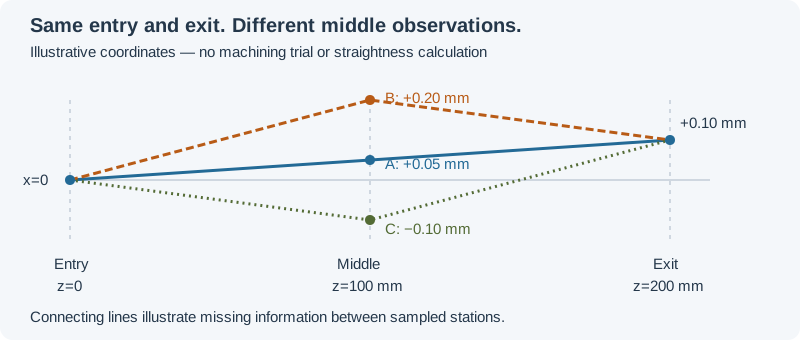
Opening diameter, taper, axis position and wall texture are different possible characteristics. Select the ones the drawing actually requires. A view of the entrance can document the entrance; it cannot independently characterize the complete internal length.
The coverage diagram below gives an editorial example of equal endpoints with different unresolved interiors. It contains no EDM or laser test result. Use the quality worksheet to define the locations and characteristic needed for a matched sample.
Continue to the ultrashort-pulse cooling-hole article for the optical system and feature questions, or measurement methods for the arrangement behind a reported value. The useful comparison keeps apparatus, operation, observation and delivered feature in separate fields before deciding whether either route fits the task.
Revision note
October 8, 2026: revised the technical explanation and connected reading after source review. Original publication date and URL retained.