Choose a deep hole drilling method by defining the required feature and then screening complete proposed routes. A diameter and an L/D ratio help describe the geometry, but they do not resolve the tool, fluid circuit, entry or inspection arrangement.
Fix the drawing question first
Record the supplied material, starting stock and required bore. Keep full-diameter depth, bottom or exit condition, intersections and the drawing characteristics visible. If the question is diameter acceptance, its observation plan differs from one about axis location or wall texture.
This is our editorial selection workflow. It uses the original process descriptions to identify compatibility questions rather than assigning an unsourced method ranking.
Screen the physical interfaces
The botek process explanation distinguishes the supply and return arrangements for gun, BTA and ejector drilling. A candidate should identify its complete installation, including the relevant entry and fluid connections.
If an interface remains unresolved, keep the route provisional. That is more specific than concluding that the entire process family cannot do the job. The equipment-selection article develops the tool-to-machine review.
Describe every stage that produces the output
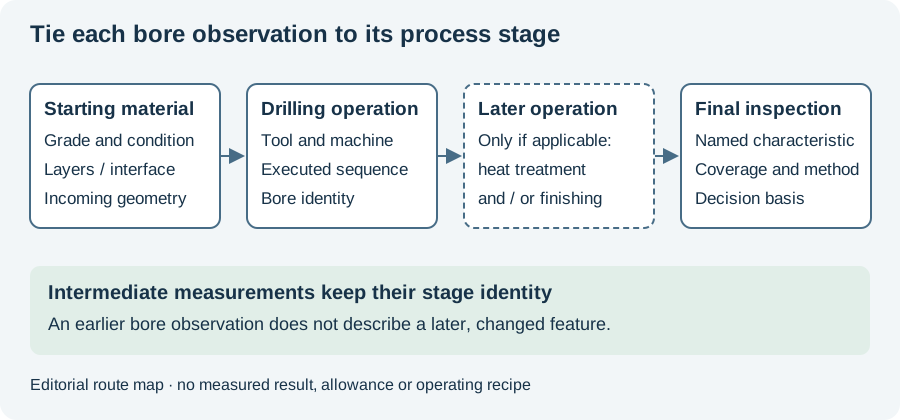
UNISIG’s technical reference distinguishes removal operations and subsequent machining. Retain any enlargement, bottom forming or finishing included in a proposal. A comparison between an initial hole and a delivered finished bore is not yet a matched production comparison.
For a blind trepanning proposal, for example, the core-removal question belongs beside the bottom requirement. For an optical proposal, identify the actual drilling arrangement and any entrance-shaping stage.
Check the evidence against the characteristic
Published capability, a local trial observation and a production acceptance record are different evidence types. Record which one the proposal actually supplies. A measured sample can be useful while leaving another characteristic or location unobserved.
The route diagram below carries the bore identity through applicable later operations to final inspection. It gives no generic allowance or machining setting.
Compare cost only for routes with a defined output
Use the same included-charge boundary and accepted-output unit. The cost-per-accepted-hole calculator performs that arithmetic; it does not predict yield, tool life or suitability. If an uncertain input changes the preferred route, show the scenario explicitly.
Continue to method comparison for the circuit differences, or route-cost comparison for the accounting fields and sensitivity. The worksheet or calculator should be used at the stage it supports: defining a comparable proposal, or evaluating supplied cost and acceptance data. Neither substitutes for the physical feature and its inspection evidence.
Revision note
October 8, 2026: revised the technical explanation and connected reading after source review. Original publication date and URL retained.