Axial vibration-assisted gun drilling deliberately adds motion to the process. That is a different proposition from observing unwanted chatter and trying to suppress it. The comparison begins by identifying what moves and how the motion is described.
A manufacturer describes an axial device
botek’s English Axial-Pulsator page and German description present a device for straight-fluted deep-hole tools, particularly in steel and other long-chipping materials. Increased feed and retained hole quality are manufacturer benefit statements.
The description supports identifying a deliberate axial tool-motion system. It does not supply an optimum frequency and amplitude for every steel condition and drilling geometry. A stated device capability also differs from a controlled comparison with an unassisted operation.
Motion terminology needs units and a reference
For a proposed system, retain the supplier’s motion definition. Peak displacement and peak-to-peak travel are different quantities. A vibration frequency without the corresponding spindle speed and synchronization description leaves the physical sequence incomplete.
These are questions for the system documentation, not operating settings supplied by this article. The controller, tool compatibility and integration arrangement belong to that documentation as well.
Compare the endpoint that motivated the assistance
Our editorial trial framework begins with an identified unassisted operation on the same required feature. Retain the tool, steel condition, geometry and observation coverage. Then record which input changed when the assistance was added.
If the goal is chip control, recover and identify chip observations. If the goal is wall quality, define the wall characteristic and locations. If the goal is lower cost, include accepted output and any additional device or inspection charges. A shorter cutting interval does not independently demonstrate all three goals.
A paper lead still needs its methods
A publisher search identifies the 2025 low-frequency vibration-assisted gun-drilling paper concerning high-strength steel. Its methods and results lie outside the readable record, so search-result parameters and reduction percentages are not converted into a verified steel operating table.
For a different, accessible assisted-drilling experiment, the titanium article uses an ultrasonic holder and a twist drill. Its architecture and baseline must remain separate from the gun-drilling proposal here.
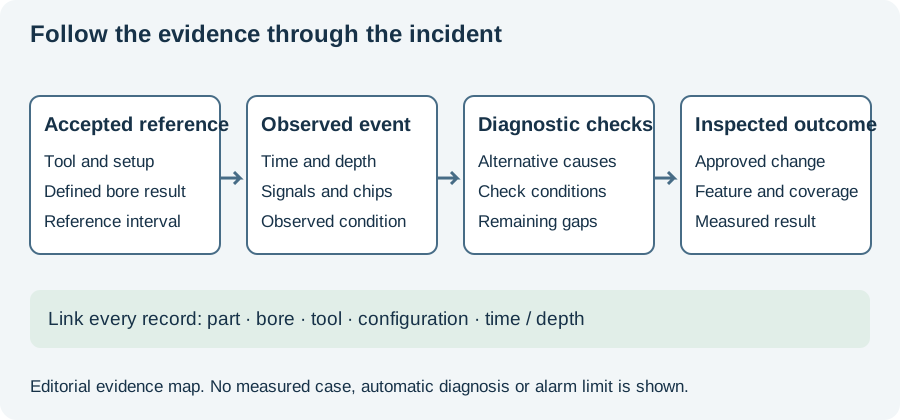
The figure below distinguishes an observed event from diagnostic checks and the inspected outcome. Use the incident worksheet to preserve a particular trial event, then continue to unwanted gun-drilling vibration for diagnosis or the ultrasonic titanium paper reading for its actual experimental design.
Revision note
October 8, 2026: revised the technical explanation and connected reading after source review. Original publication date and URL retained.