Deep hole drilling optimization methods perform different jobs. An experiment produces observations; a fitted model represents selected relationships; a search algorithm selects candidates against objectives. Physical confirmation tests whether a candidate produces the required result. Keeping those roles visible prevents a model score from becoming a manufacturing claim.
Start with the response, not the algorithm
The TU1 copper gun-drilling study models chip-related CCR and R. The AL7075-T6 abrasive-waterjet study instead evaluates kerf geometry, roughness and drilling rate. Both discuss optimization, but their outputs and removal processes differ.
For a shop task, specify the required bore characteristics and the resource boundary before choosing an analysis method. A response that is convenient to measure may not describe the acceptance constraint that matters.
Compare the roles
| Stage | Copper study example | Question for another job |
|---|---|---|
| Experimental design | Three-factor Box–Behnken response design | Which settings and repeats supply observations? |
| Model | Fitted response surfaces for R and CCR | Does the model represent the defined responses and sampled region? |
| Search | Genetic algorithm over the bounded fitted models | Which objectives and constraints select the candidate? |
| Confirmation | Nearby feasible setting physically drilled | How do measured and predicted outcomes compare? |
The table describes one reported sequence, not a ranking of algorithms. Changing the model does not create additional physical evidence.
Repeated observations matter
The copper design table contains five central-setting rows with differing results. Those rows make variation part of the evidence. Keep repeat values and their allocation rather than replacing them with the fitted surface alone. The paper’s 27-hole description and 17-row design also leave an allocation question that a reproduction should resolve.
Learning and search need separate checks
The waterjet article uses an 80:20 training/test split and compares learned predictors before optimization. This concerns a 12 mm plate with nominal 2 mm holes, not a gun-drill dataset. A favourable test prediction therefore cannot demonstrate transfer to another tool, machine or removal method.
Check predicted versus physical outputs and the measurement coverage used for each. Preserve the implemented setting when it differs from the numerical search result. Then inspect the acceptance characteristics omitted from the fitted objectives.
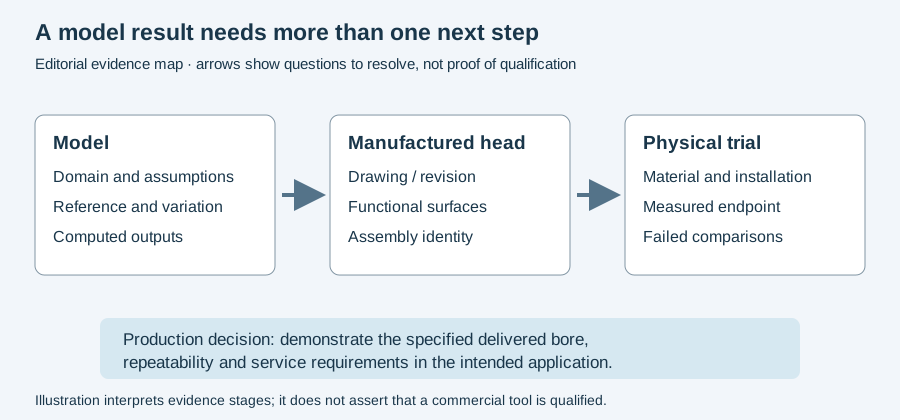
The diagram below separates model development from an approved physical trial. Use the technical-review proposal to identify a specialist who can review the objective, original evidence and unresolved implementation questions. Continue to the full copper interpretation or the machine-learning article according to which stage needs further scrutiny.
Revision note
October 8, 2026: revised the technical explanation and connected reading after source review. Original publication date and URL retained.