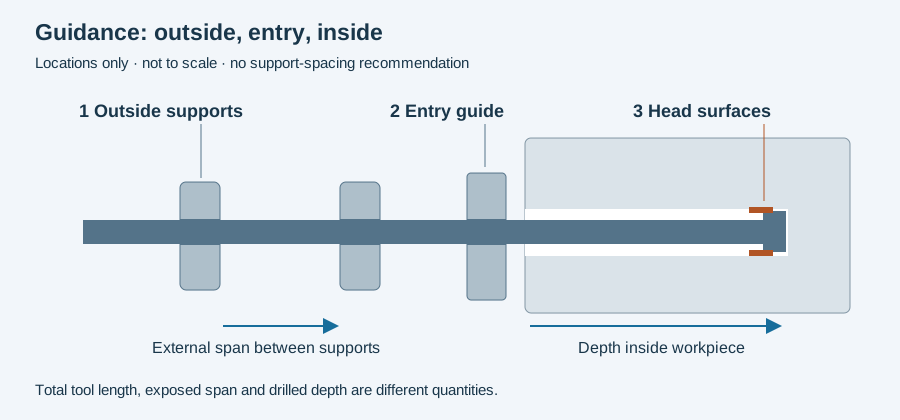
A depth-ratio parameter adjustment needs more than L/D. The ratio describes geometry; it does not identify the drill construction, unsupported length, entry guidance or fluid passages. Retain those details before treating one depth change as a reason for a particular speed or feed change.
Define the depth used in the ratio
For an arithmetic illustration, a 500 mm drilling depth at a 10 mm nominal diameter gives L/D = 50. The same depth at 20 mm gives L/D = 25. These ratios do not establish that either operation is feasible.
State whether L means required bore depth, cutting length or another drawing dimension. Also record the unsupported tool length separately. A chip-clearance length, overall tool length and finished bore depth are not interchangeable entries.
Depth appears in entry guidance
The Botek single-/twin-flute catalogue includes entry-guidance tables organized by tool type, diameter group and depth ratio. Its Type 113 guidance does not treat pilot depth as an identical number for all lengths. The corresponding German catalogue also presents those relationships.
That evidence supports reviewing the complete tool-specific setup when depth changes. It does not supply a universal feed reduction for each L/D band. Preserve the applicable table and tool type rather than exporting an entry dimension to another family.
Quantity conversion is not depth compensation
Sandvik’s speed/feed relationships contain diameter and rotation, but no automatic L/D derating factor. The converter below therefore performs arithmetic on selected values; it cannot determine how a long-bore process should be adjusted.
Keep a proposed parameter change separate from the source setting and record the reason for the change. Tool guidance, fluid transport and the required inspection coverage belong to the application evaluation even when the numerical feed remains the same.
Inspect the feature over the required extent
A longer bore also changes what an inspection must reach or sample. A diameter value at an accessible end does not describe the complete path. Establish which characteristics and locations the drawing requires, and retain the actual acquisition coverage.
Use the tool/setup information to identify the next evidence. Continue to pilot and bushing guidance for entry conditions, or the bore-measurement article when the unresolved issue is full-depth quality. Do not make a deeper-hole qualification from a ratio calculation alone.
Revision note
October 8, 2026: revised the technical explanation and connected reading after source review. Original publication date and URL retained.