The 2025 publication on a novel BTA tool for nickel superalloys is titled “Research on the design and cutting performance of a novel BTA boring tool intended for machining of nickel-based superalloys.” The word boring matters when deciding whether a result addresses a proposed solid-drilling operation.
The identifiable publication
Journal of Materials Research and Technology publishes the paper in its May–June 2025 issue. Publisher metadata confirms the title and DOI. The complete experimental body lies outside the readable record, so no claimed geometry, alloy-specific setting or performance number is reproduced here.
That access boundary leaves the experiment unresolved. It does not establish that the new tool performs poorly or that the work lacks validation. It means this page cannot yet audit that comparison.
Separate the operation before comparing heads
The botek BTA catalogue distinguishes solid-drilling tools from counterboring and pull-boring constructions. Its product taxonomy shows why “BTA tool” alone does not define the incoming bore condition or material-removal task.
For an applicable comparison, identify whether the tool starts in solid stock or enlarges an existing hole. In the latter case, the preceding bore and remaining stock belong to the task definition. Do not assign a boring-tool finding to solid drilling simply because both use a BTA-related system.
What the original comparison must establish
The useful next evidence is the actual baseline and changed feature: cutting-edge arrangement, pad construction, cutting material or another documented modification. Keep the nickel-alloy designation and supplied condition, head geometry, incoming bore and inspection with that comparison.
Then separate the measured outputs. A diameter result does not describe the whole bore path; a force trend does not establish tool-life cost. The source’s measurement locations, coverage and endpoint must match the production question being asked.
These are editorial reading questions for the full study, not reconstructed descriptions of its inaccessible experiment. They also apply when a supplier presents a modified head without a published comparison.
Connect the research question to an actual trial
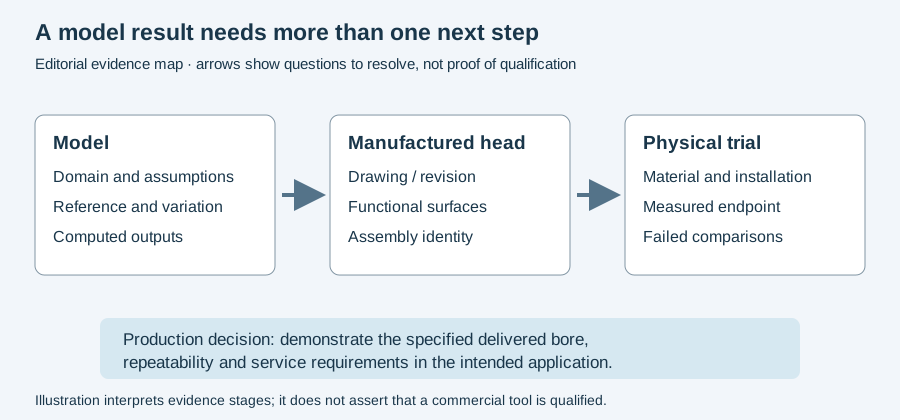
The diagram below separates a design/model claim, manufactured tool and physical application result. Use the technical-review form to provide the original paper or a documented head comparison for review. Continue to the BTA tooling article for actual component and connection functions, or inspection planning when the proposed benefit is geometric bore quality.
Revision note
October 8, 2026: revised the technical explanation and connected reading after source review. Original publication date and URL retained.