Specify the circuit and requirement first
Identify the coolant, installed tool/pump requirements, clean-supply and dirty-return functions, operating flow conditions and connections. The following comparison is an editorial specification framework. It does not choose a universal micron rating or filter type for deep-hole drilling.
Request a complete rating statement
| Supplier statement | Follow-up evidence to request |
|---|---|
| Particle-size label | Definition of the stated efficiency, test conditions and source document |
| Flow capacity | Fluid and operating conditions attached to the stated value |
| Pressure loss | Relevant condition and how it changes in the proposed operating range |
| Filter medium | Installed material/part number and compatibility information |
| Maintenance requirement | Provider-approved indicators, replacement criteria and procedure |
| System integration | Transfer, clean tank, pump, connection and monitoring arrangement |
Do not rank two labels as equivalent until their definitions are known. Mark missing test or condition information as a quotation deviation; do not invent a conversion between rating systems.
Examine the complete installation
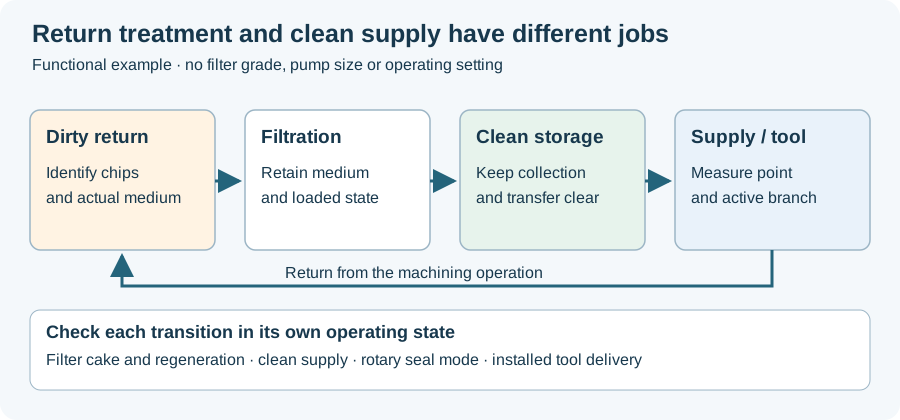
KNOLL’s named LubiCool-M circuit includes filtration between dirty transfer and clean storage before pressurized supply. This provides manufacturer context for the integration question. It does not establish a filtration grade for an unrelated drill or prove performance after retrofitting another machine.
Include maintenance in the commercial comparison
Request media/consumable pricing, waste handling, service scope and the effect of maintenance on the agreed production schedule. Separate quoted assumptions from actual operating records. No universal payback period, cleanliness level or tool-life improvement is asserted.
Define the acceptance record
Agree what will be verified after installation: the exact components, applicable performance documents, measurement locations, operating state and component-quality requirements. Keep evidence of delivered conditions alongside the bore inspection record. If the proposed verification cannot distinguish supply and return functions, resolve that gap before calling the integration demonstrated.
Use the RFQ worksheet for exclusions and coolant troubleshooting for an observed delivery issue. Settings and service actions remain governed by the actual provider documentation.
Include loaded and regenerated states in acceptance
The original KNOLL KF description makes the comparison more specific. In that belt-filter architecture, retained particles form a cake; increasing resistance raises trough level and prompts advance of clean fleece. The German description gives the same functional sequence.
For a proposed KF installation, discuss which states the agreed capacity and delivery check covers. Fresh medium alone does not represent every interval in the documented process. For a different filter architecture, use its own loading and regeneration description rather than importing the KF sequence.
Keep media consumption and maintenance activity attached to the same production period as accepted output. A quotation may include estimated consumable demand; a later operating record should retain actual usage separately. The circuit diagram below locates filtration before clean supply. Continue to the filtration explanation for the cake/level sequence, or accepted-hole cost when the comparison concerns total included charges and delivered bores.
Revision note
October 8, 2026: revised the technical explanation and connected reading after source review. Original publication date and URL retained.