A coolant rotary union transfers medium across a stationary-to-rotating interface. Selection for deep hole drilling needs the operating sequence as well as the connection size. Fluid supply, loss of pressure, dry-air use and MQL can call on different seal behavior in a named product.
Read the seal description by operating state
Deublin’s original coolant-series page distinguishes closed-seal arrangements, PopOff seals that separate without medium pressure, and AutoSense arrangements described for changing fluid, MQL and dry-air conditions. Those are product-specific functions, not interchangeable descriptions of every rotary union.
A dry-running statement should therefore stay beside the relevant series and state. Do not infer that a union intended for liquid delivery can operate under any air or unpressurized sequence.
Mounting and motion belong to the interface
The same producer describes bearingless and bearing-supported constructions and models accommodating different axial strokes. Some configurations must follow drawbar motion; others address thermal movement. These requirements are separate from the drill’s nominal diameter or intended hole depth.
For an installation comparison, preserve the spindle mounting arrangement, axial movement and actual sequence supplied by the machine builder. The article’s functional comparison is not an assembly or commissioning procedure.
Keep drainage distinct from tool return
The producer identifies drainage provisions in bore-mounted configurations. A drain path around a spindle interface is not the chip-laden return route from the hole. Locate both on the actual installation drawing before interpreting collected liquid or a leak observation.
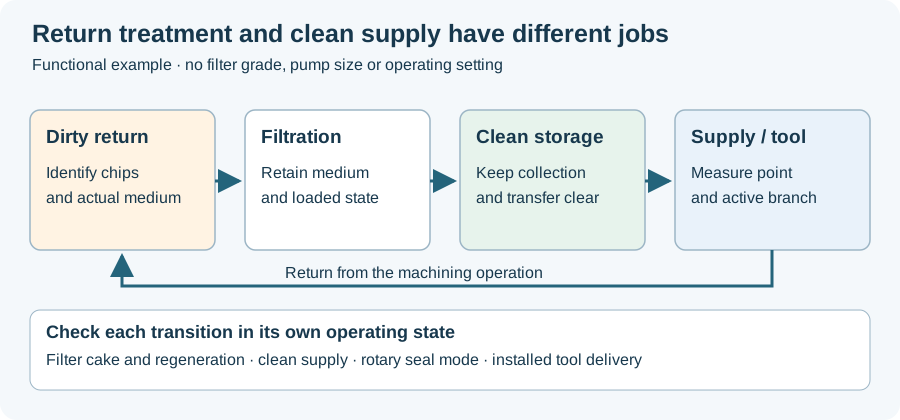
The supply-loop figure below intentionally omits those detailed drain passages. It locates the rotating interface within the larger system; the specific union drawing defines the passages.
Investigate a delivery event at the correct point
If tool delivery changes, retain the union’s model and medium state alongside pressure/flow measurement locations, spindle state and active outlets. That evidence can guide an investigation without attributing the event to the seal merely because it lies in the path.
No universal service interval, particle-size limit or combined pressure/speed rating is given here. Those require the actual model’s applicable document and operating conditions. Use the RFQ worksheet to record the interface and required modes. Continue to MQL for the distinction between carrier and lubricant delivery, or coolant troubleshooting for a documented change during operation.
Revision note
October 8, 2026: revised the technical explanation and connected reading after source review. Original publication date and URL retained.