The first head-selection question is what the supplied part already contains. A solid blank and an existing bore require different cutting tasks, even when both appear in a double-tube-system catalogue.
Begin with the incoming geometry
botek’s ejector product table separates solid-drilling heads from counterboring heads. This distinction is more useful than a list of diameters when defining a route: counterboring presupposes an opening to enlarge.
An illustrative enquiry for a finished 35 mm bore could start from a solid forging or a smaller pre-bore. Those enquiries share a final diameter but leave different work for the proposed head. State the incoming geometry before comparing the cutting assembly. This example is a scope comparison, not a recommendation for a particular product.
Construction is an independent choice
Keep the selected head’s designation, replaceable parts and setup responsibilities together. “Indexable” alone does not document which parts locate the cutting edges or which inspection follows their replacement. A consumable price is not the charge for an inspected, ready-to-run assembly.
If a proposed substitute changes cutting geometry as well as construction, preserve both changes. A subsequent bore result belongs to the supplied configuration; it cannot isolate insert material as the only cause.
Complete the assembly definition
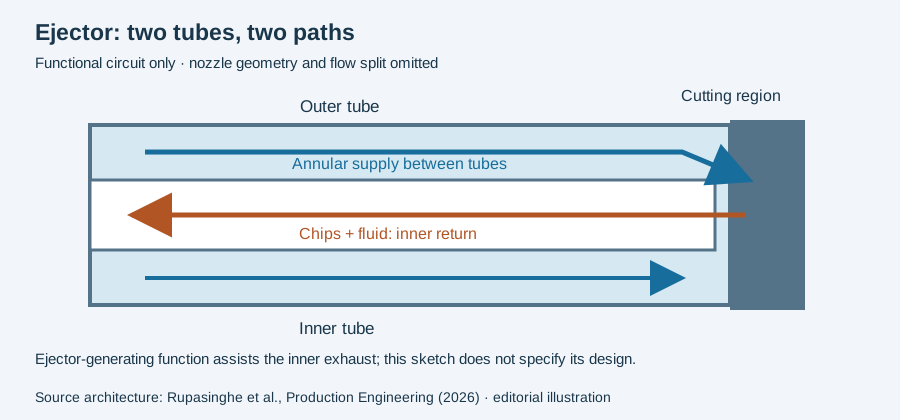
The circuit sketch shows why the head cannot be selected independently of the inner return and outer supply arrangement. Document the head-to-tube connection and the proposed machine-side connector, using the supplier’s actual drawing. Do not infer a fit from a similar nominal bore diameter.
Use the RFQ worksheet to retain the incoming part, required bore and offered assembly in one request. Continue to the tooling arrangement when the unresolved item is a tube or connector; read the tested-head study when the proposal relies on a published chip-mouth modification. A simulation result and a catalogue item are different evidence for a selection.
Revision note
October 8, 2026: revised the technical explanation and connected reading after source review. Original publication date and URL retained.