A service report needs to identify the component changed, not just say that the “ejector was repaired.” Connector, tube and head observations address different places in the circuit.
Preserve the connector’s actual arrangement
The botek catalogue lists rotating and nonrotating connectors separately. Its rotating-connector notes on page 47 require a housing rotation stop. Keep the applicable manufacturer’s arrangement with the installed connector’s identity; a generic swivel label does not establish that configuration.
For a replacement record, retain the removed designation, proposed designation and controlling assembly drawing. If a sealing sleeve, tube pair or supply fitting changes at the same time, record each change. Successful circulation afterwards then describes the combined serviced configuration.
Place observations on the circuit
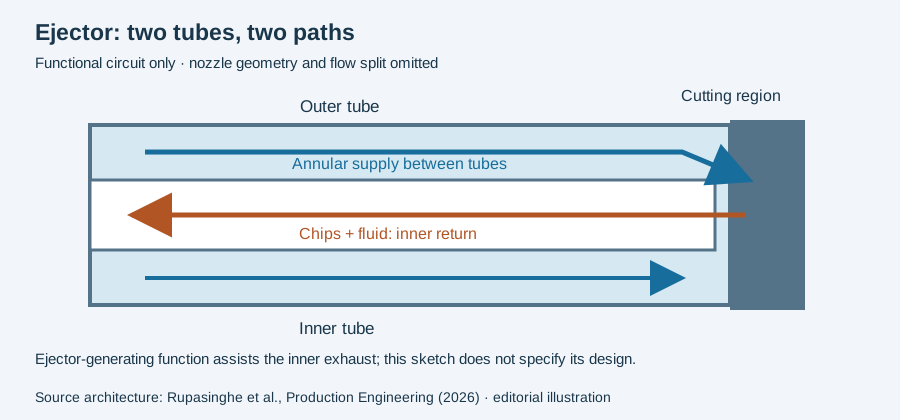
The sketch below locates supply and inner exhaust. Mark where a pressure, flow, temperature or discharge observation was taken and whether the machine was cutting, circulating idle or stopped. Numbers from different operating states cannot reconstruct one delivery condition by themselves.
An illustrative fault record might contain a pump gauge reading after a stop and a photographed outlet during drilling. Both observations can be useful, but their different times must remain visible. They are not a synchronized pair proving the condition at the head.
Close a service investigation with its endpoint
Record what the authorized service established and what remains untested. Restored discharge can be one observation; it does not also document final bore acceptance. Likewise, replacing a suspected component does not prove it was the original cause if other conditions changed.
Use the incident worksheet for the timeline, changed components and acceptance evidence. Continue to coolant-system investigation for measurement boundaries and ejector troubleshooting for connecting the outlet observation to the reported symptom. No universal replacement interval is established by the sources reviewed for this article.
Revision note
October 8, 2026: revised the technical explanation and connected reading after source review. Original publication date and URL retained.