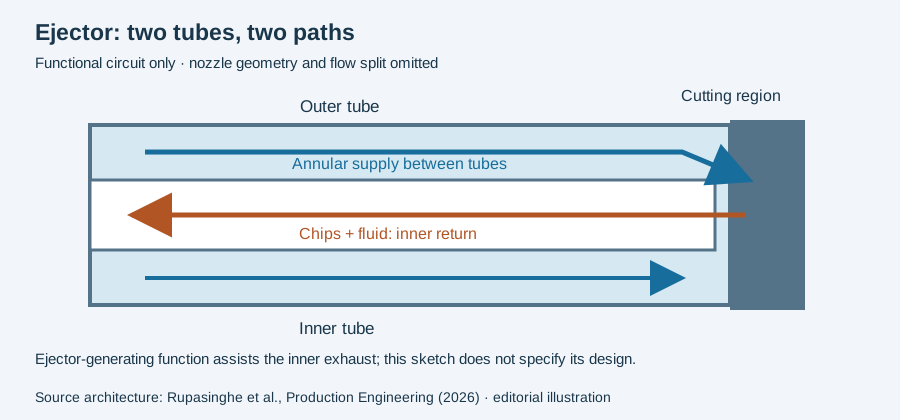
An application category such as “energy” or “mould making” does not select the drilling route. The component’s entry geometry and the proposed fluid circuit provide a more concrete starting question.
Why the workpiece seal matters
Page 33 of botek’s catalogue identifies oblique entry and discontinuous workpieces as situations motivating its seal distinction from BTA. This is the manufacturer’s application rationale, not evidence that every such feature is automatically suitable for every ejector head.
Describe the actual discontinuity: its position in the route, the incoming geometry and the required bore. Then retain the supplier’s proposed head, guidance and installation. An industry label omits the details that distinguish one component from another.
A route example without an invented case
Consider an illustrative enquiry containing a non-flat entry face. The first unresolved item is whether the proposed installation can support its required entry and return functions for that component. The correct comparison is a reviewed arrangement for the drawing, not a generic claim that one process handles irregular surfaces.
If the enquiry also contains an existing bore, state whether the task is enlargement, finishing or a new opening. Keep that operation separate from the entry question. These are different reasons for selecting a tool.
Check what the reported application actually demonstrates
A catalogue description establishes an offered arrangement. A supplier case can establish what that supplier reports for its named component. An inspected comparison would additionally need the conditions and results necessary to evaluate the proposed delivery endpoint. Keep those evidence levels separate when assessing a claim.
Use the RFQ worksheet to define the component and required acceptance record. Continue to CNC installation planning for layout questions, or retrofit comparison for the investment boundary. Original application results can be added when an actual case and its publication permission are available.
Revision note
October 8, 2026: revised the technical explanation and connected reading after source review. Original publication date and URL retained.