What is ejector drilling?
The double-tube system uses a dedicated coolant and chip-return arrangement. It differs from BTA in how the coolant is introduced and the process is connected to the machine. Manufacturer process description.
When to consider it
Ejector systems can be considered for suitable existing-machine installations. A retrofit still needs an application review; neither installation simplicity nor a maximum depth follows from the method name alone.
Use the shared method capability reference for process distinctions and comparison with other tools. Confirm any diameter or depth capability against the selected installation.
What determines the result
Check head and inner/outer tube compatibility, connector, flow capacity, guidance and machine integration. Record the material state, bore dimensions, intersections and entry/bottom geometry. Define size, geometric tolerance and surface texture independently, then plan how each requirement will be inspected.
Choose the complete manufacturing route
Compare setup, cutting and return travel, tool changes, inspection and any finishing. The drilling method alone does not determine the total cost or whether honing, reaming or another finishing process is needed.
Next steps
Use the selection decision guide to prepare the application review, the tolerance guide for acceptance requirements, and the ejector drilling topic for specialist articles.
The double-tube arrangement is the distinguishing feature
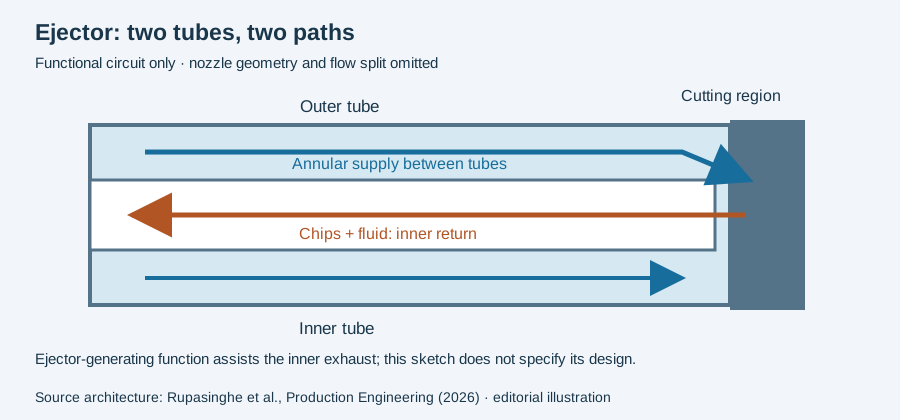
The open-access ejector study describes annular supply between two tubes and chip/fluid exhaust through the inner tube. It relates that exhaust to the ejector effect. The sketch below separates the two paths without supplying a dimensional head design.
Read “double tube” as an arrangement that must connect to an actual machine and tool. The label does not establish that a proposed standard machining centre has the required tooling interfaces, delivery and discharge provisions. Those details belong to the actual installation proposal.
The distinction from BTA is useful when planning entry and fluid delivery, but it does not make the two methods interchangeable for every bore. Preserve the starting material, required geometry, tool series and inspection endpoint when comparing a retrofit with a dedicated installation.
For the sequence of functions, continue to the ejector process. For what a physically tested head modification established, read the research interpretation before borrowing a flow-reduction claim.
Revision note
October 8, 2026: revised the technical explanation and connected reading after source review. Original publication date and URL retained.