Gun drill vibration suppression can concern a changed shaft, changed support arrangement or a control intervention. A result for one configuration does not establish another. The 2026 dynoSpan announcement documents a research concept rather than a universal damping specification.
What the institutions announced
On April 23, 2026, IFW Hannover’s English announcement described DFG-funded work with ISF at TU Dortmund. The concept replaces a metallic shaft with a CFRP tube and investigates laminate design, a hybrid head/shaft connection and an additively manufactured head. Its German counterpart presents the same development objective.
The announcement links intended damping changes to bore quality and wear, but supplies no matched drilling dataset or quantified production benefit. Those intentions remain research claims, not inspected application results.
More changes than the shaft material
The proposed concept also describes both fluid supply and removal through internal tool channels. That is a significant distinction from the conventional gun-drilling arrangement’s external-flute return. A standard gun-drill circuit sketch would therefore be misleading if presented as the dynoSpan prototype’s section drawing.
The head/shaft interface and modular configuration also belong to the concept. If a later trial changes shaft, head and passages together, its outcome initially describes the tested assembly. It cannot automatically isolate the contribution of CFRP alone.
Follow the evidence from concept to bore
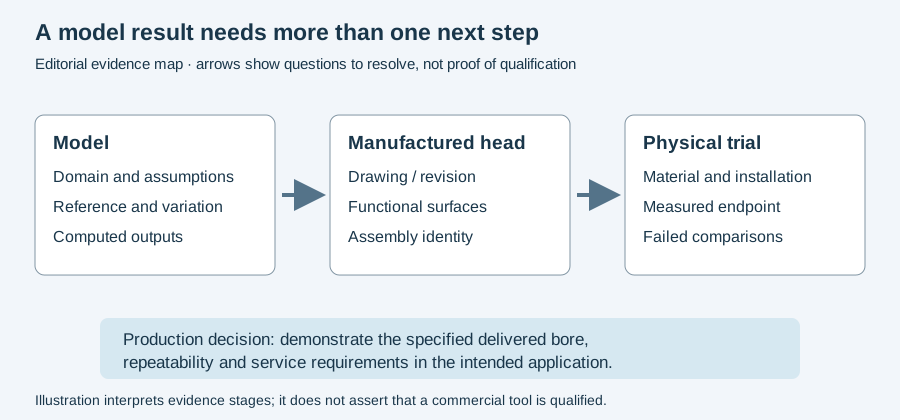
The diagram below is an editorial evidence map, not an image of the research tool. A concept needs a specified manufactured configuration; a physical trial needs material, geometry, support and cutting conditions; an application claim needs relevant inspected output.
Distinguish a measured vibration signal from a finished-bore result. Retain where the signal was acquired and which bore characteristic was measured. A smaller signal at one sensor does not by itself establish lower surface-texture values, less tool wear or a transferable process window.
For an actual comparison, preserve the complete assemblies, external spans, motion, fluid arrangement and repeated observations. Explain which variables differ and which inference the trial can support. No damping percentage, tool-life multiplier or retrofit price is inferred from the announcement.
Suppression and deliberate axial motion answer different questions
Reducing unwanted vibration is different from deliberately imposing motion for chip control. Read vibration-assisted gun drilling for that separate intervention. For an existing machining symptom, vibration troubleshooting connects observations to the actual setup.
The technical-review proposal below can define a specialist review of the trial claim and its supporting configuration when new results become available.
Revision note
October 8, 2026: revised the technical explanation and connected reading after source review. Original publication date and URL retained.