A gun drill’s lifecycle contains several states: supplied, used, inspected, serviced and returned to production. One accumulated hole count cannot describe all of them. Preserve the physical tool identity and separate its production intervals at each relevant service or configuration change.
Physical identity and service state
botek’s regrinding page lists named gun-drill types and requires exact nose-grind information when servicing other brands. Its coating service is a separate offered operation. These descriptions explain why “sharpened” alone does not identify the returned tool.
Keep the original designation and a durable internal tool ID. Attach service events to that ID rather than renaming a reground tool as though it were an unrelated new purchase. A geometry or coating change should remain visible within the same history.
Where to divide the intervals
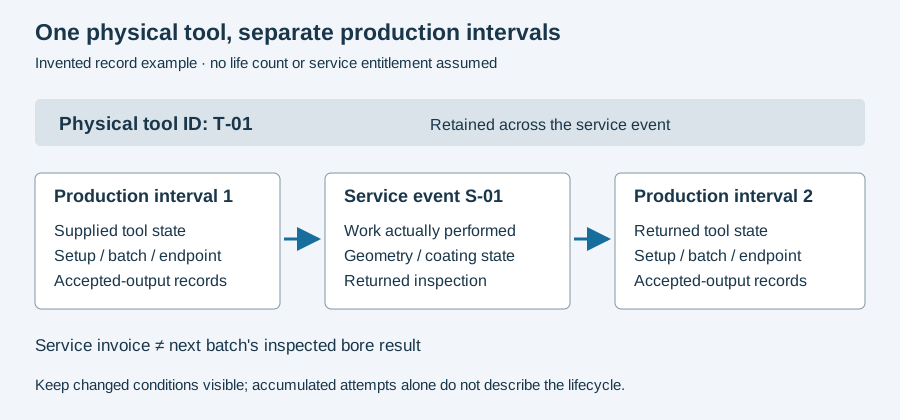
The diagram below shows an invented record sequence: tool T-01, initial production, a service event and a subsequent production interval. It contains no measured life result or assumed entitlement to repeat service indefinitely.
An interval needs a defined start state, its machining context and an endpoint. The endpoint may be planned removal, a recorded inspection condition or an interrupted operation; identify which occurred. A planned removal does not demonstrate the maximum attainable life, while a breakage count without its conditions does not define a transferable life limit.
For each interval retain the supplied/returned geometry, relevant setup and program identity, material/batch, actual attempts, accepted output and the reason for removal. If another process condition changes within that period, mark it instead of assigning all later observations to the service alone.
Connect the record to inspected output
A service invoice establishes work charged, not the bore quality of the next batch. Retain the returned inspection and the subsequent bore results as different records. A successful cutting interval also cannot establish that every component passed an unmeasured datum or surface requirement.
Use the bore-quality worksheet for those feature and coverage definitions. The record should let a reader trace an observed bore condition back to the tool state and machining interval that produced it.
Allocate costs over the stated period
If purchase cost is allocated over several intervals, explain the accounting boundary. Include each service charge once and retain actual accepted output from the same period. Compare with a replacement route on the same basis; do not presume a fixed number of regrinds or life recovery.
Continue to regrinding for service scope and cost per accepted hole for the denominator. Lifecycle management provides their connecting history rather than a universal maintenance schedule.
Revision note
October 8, 2026: revised the technical explanation and connected reading after source review. Original publication date and URL retained.