Published gun-drill construction descriptions reveal which parts and joints form the tool. They do not necessarily reveal the factory’s grinding order, brazing conditions, heat treatment or acceptance procedure. A manufacturing explanation should preserve that boundary.
Two documented material routes
In TBT’s brazed-head description, the cutting head, steel shaft and steel clamping sleeve are separate components connected by brazed joints. The head can be carbide or a steel body carrying carbide elements. In its solid-carbide version, the head and shaft originate from one carbide blank, with a steel clamping element attached to that body.
Pages 6 and 14 of the botek catalogue describe the corresponding construction distinction. A Type 113 carbide head-and-shaft body is different from a Type 110 brazed head on a steel tube. “Brazed joint” therefore does not alone identify the complete material route: even a solid-carbide working body can connect to a steel driver by brazing.
These descriptions support a component map. They do not establish that every supplier uses the same joining procedure or carbide-processing sequence.
Geometry is an additional manufacturing specification
The catalogue separates nose-grind geometry from peripheral contour. The first concerns the cutting end; the second concerns the head’s circumferential guide arrangement. A tool can share its nominal diameter and construction with another while differing in these features.
For an existing tool, retain the relevant drawing or supplied designations. A service request that supplies only diameter and overall length may leave the intended cutting and guide surfaces unidentified. The geometry article explains those separate fields.
The coolant passage and flute belong to the component identity
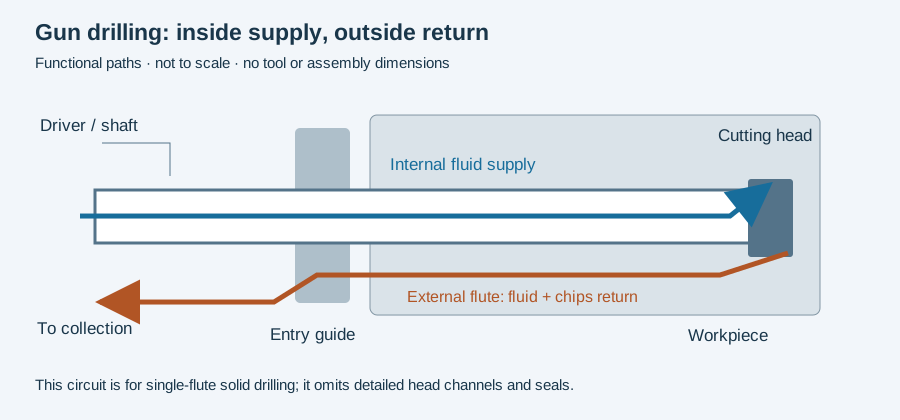
The supply passage carries fluid inside the tool, while the external flute returns chips in the solid-drilling arrangement shown below. Construction documents specify those features as part of the tool, not as an interchangeable machine accessory.
If a manufacturing change affects a passage, shaft section or head connection, describe which feature changed before attributing a later machining result to “new tooling.” A complete-tool result involves the assembled configuration, not only the material named for its cutting tip.
What remains a supplier-specific process
The sources reviewed here do not provide a verified end-to-end factory recipe. No brazing temperature, grinding pass sequence or straightening method is prescribed. For a supplied tool or service, ask for the controlling construction/geometry specification and the inspection attached to the delivered state.
The RFQ worksheet can retain that scope. Continue to carbide tool selection for comparable offers or regrinding when the requested work concerns an existing cutting end.
Revision note
October 8, 2026: revised the technical explanation and connected reading after source review. Original publication date and URL retained.