A gun-drilling application is a component and manufacturing route, not simply an industry label. Surgical tooling provides a useful example because the supplied shape, small bore and part transfer must be considered together.
Read a named system as a route
UNISIG’s 2022 surgical-instrument automation article describes a dual independent-spindle UNE6-2i system and workpiece transfer between its operations. It discusses where the robot grips a part, where the machine clamps it and how enlarged external features affect loading.
These are supplier-described application relationships. They explain why a bore diameter and depth alone cannot define the cell: the blank must physically reach its machining position, and subsequent operations must preserve the intended feature relationship.
The publication also describes processing from both ends. That is a route description; it does not by itself demonstrate the internal junction geometry or provide an acceptance rule for another component. Keep each bore segment, setup and measured endpoint attached to the actual part drawing.
The supplied blank changes the question
An assumed component with an enlarged end and a narrow cylindrical body may need a different gripping location from a plain cylindrical blank. This is an editorial example of why the full outside shape belongs beside the bore specification, not a drawing of the reported supplier application.
If a proposal begins after turning, retain the supplied outside datums and stock condition. If another operation follows drilling, identify the feature it receives. An application cannot be assessed fully by comparing only the instant at which the cutting head reaches depth.
What an application article can establish
A manufacturer publication can document its stated machine arrangement and explain its offered process. A customer case can report a particular outcome under the conditions it actually supplies. An inspection report supplies a different kind of evidence about delivered geometry.
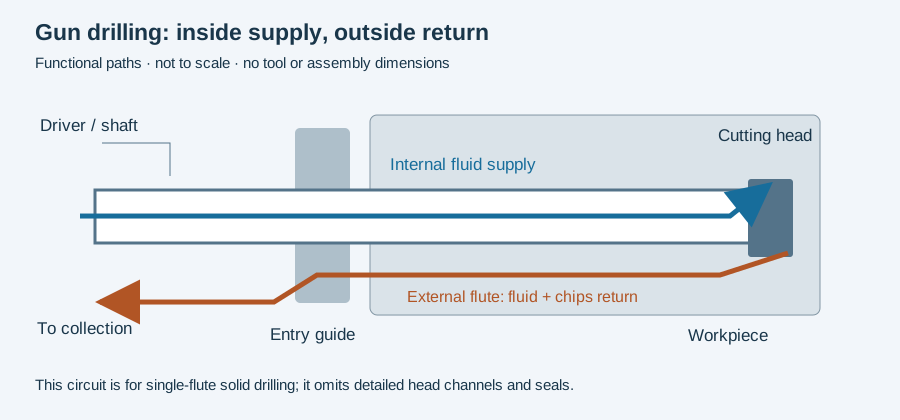
Do not combine spindle specifications or cycle claims from separate historical UNE6 publications into one imaginary production trial. The circuit diagram below describes gun drilling generally; it contains no measured result from the surgical-tooling example.
Define the deliverable before comparing routes
Identify the bore size, geometric relationship to external features, surface-texture requirement and inspection coverage. Record which operations create those features and which measurements support their acceptance. A finished external photograph cannot describe every internal characteristic.
Use the RFQ worksheet to retain the component and route. Continue to micro gun drilling when diameter is the principal system question, or quality control when the application claim needs an inspected endpoint.
Revision note
October 8, 2026: revised the technical explanation and connected reading after source review. Original publication date and URL retained.