“Gun drilling without high-pressure coolant” can refer to different supply mechanisms. Simply reducing a liquid pump setting is not the same as using an engineered compressed-air/oil system. The distinction matters because the supplied medium and chip-transport mechanism change.
A documented alternative supply mechanism
Mollart’s spray-mist description uses shop compressed air mixed with oil from a reservoir, then sends a timed pulsed mixture to the drill. It assigns chip evacuation to the air and lubrication to the minimal oil supply.
Its application block states 5–25 mm holes and depth up to 2,000 mm. These are supplier-offered limits, not proof that every diameter/depth/material combination inside that rectangle has been accepted. The page does not supply one approved cycle or operating input for all conventional machines.
The documented system is therefore evidence of a different supplied arrangement. It is not evidence that an ordinary flood pump or oil can can replace it. A proposed retrofit needs its actual tool, connection, containment, guidance and application documentation.
Lower liquid pressure needs its own review
In a liquid circuit, the Gühring coolant FAQ distinguishes pressure and quantity and describes measurement with the actual installed tool. A lower displayed pressure does not alone establish an adequate flow or chip-return condition.
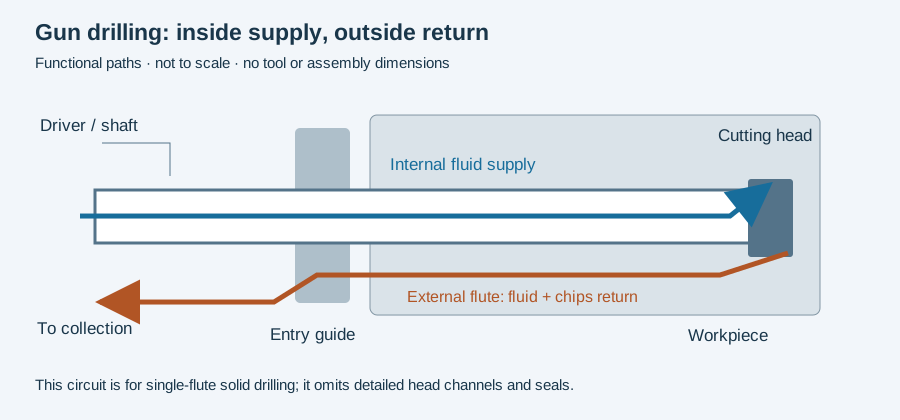
Record where the reading is made and the selected tool/fluid configuration. The gun-drilling circuit sketch below shows internal supply and external return, but it does not calculate the required pressure. It also is not a detailed spray-mist mixing diagram.
Do not transfer a setting between mechanisms
The botek catalogue, page 5, treats MQL as applicable under specified conditions rather than a universal substitute. A fluid recommendation for one tool or a liquid-pump setting cannot define a compressed-air/oil mixture, pulse rate or required delivery for another setup.
For an actual proposal, identify the medium, supply method and complete tool designation first. Then obtain the application-specific cutting and entry/withdrawal instructions. No general reduced-speed percentage, oil mixture or allowable hole depth is prescribed here.
Judge the delivered feature
The relevant endpoint is the inspected bore under the stated conditions, not merely successful chip exit or reaching depth. Keep material, geometry, setup and inspection coverage attached to any reported result.
Use the RFQ worksheet to make the supply mechanism explicit. Continue to coolant-system measurement for liquid delivery or the gun-drilling mechanism for the relationship between supply, guidance and cutting.
Revision note
October 8, 2026: revised the technical explanation and connected reading after source review. Original publication date and URL retained.