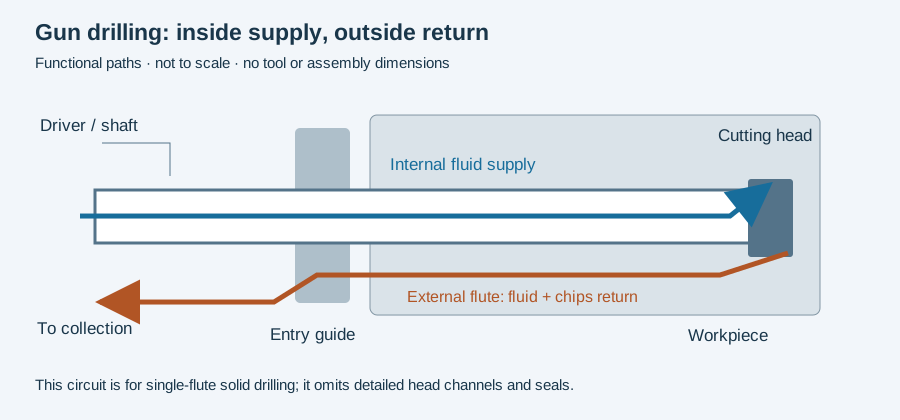
A gun-drilling machine integrates cutting motion with entry guidance, external tool support and a contained fluid-return route. Its drilling diameter and travel are useful screening specifications, but they do not describe all of those functions.
Map the cutting axis and the return circuit
UNISIG’s machine overview distinguishes the spindle, entry bushing, chipbox, whip guides and coolant system. The spindle supplies the tool’s motion and torque. Entry guidance locates the start of the bore. The chipbox maintains the relationship between the spindle and bushing and directs the discharged fluid/chip mixture to collection.
Those functions interact, but they are not interchangeable. A larger spindle-speed range does not establish a different guidance arrangement. A longer travel specification does not describe how the external tool span is supported throughout that travel.
The circuit sketch below gives a functional map. A real installation additionally needs the actual interfaces, machine envelope and part orientation. Keep the component shape alongside bore depth: projecting features can matter to loading and clamping even when they do not change the bore diameter.
Tooling within the machine package
UNISIG’s durable-tooling description separates drivers and collets, presetting/sealing components, whip-guide inserts and entry-bushing holders. They locate, connect or support different parts of the tool train.
When comparing machine offers, identify which assemblies are included for the intended drill. “Tooling included” is incomplete if it leaves the driver, length adjustment, entry arrangement or support configuration unspecified. The required delivered state may also differ between a machine-only order and a cell with loading and inspection.
Supply capacity and return handling
The machine overview describes a reservoir, pumping, filtration and temperature control. Follow the proposed circuit from the tank to the tool and back rather than comparing pump pressure alone. Filtration acts on returned contamination; temperature control addresses heat; neither is simply another name for fluid delivery at the head.
This article does not prescribe a tank volume, filter grade or pressure. Those choices require the named tool, fluid, process and machine configuration. A proposal should identify them together so that its operating conditions can be reviewed.
Use the RFQ worksheet for that configuration. Continue to whip guides for the moving support arrangement or coolant systems for delivery and return functions. Bore acceptance remains a separate, explicitly measured endpoint.
Revision note
October 8, 2026: revised the technical explanation and connected reading after source review. Original publication date and URL retained.