A sound heard during drilling, an oscillating machine signal and a repeating surface mark are observations from different channels. Connecting them to the same event is more useful than assigning every one the label “chatter” and selecting a remedy from that label.
Locate the observation in the cycle
Record whether the observation occurred during entry, a particular depth interval or withdrawal. Identify the signal actually available: an operator’s observation, spindle-current trace or other recorded channel. Without a time or depth reference, a surface feature found later cannot reliably be matched to a specific transient.
Do not infer a vibration frequency or mode from a photograph of the surface. A repeated mark can motivate a signal investigation, but it is not a frequency measurement. Retain the original observation separately from the proposed explanation.
External support and in-bore guidance differ
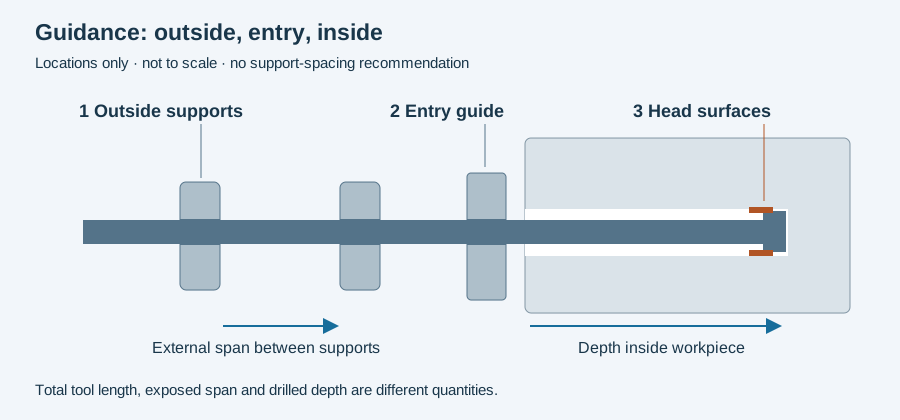
UNISIG’s gun-drilling machine overview describes whip guides supporting the tool outside the workpiece, alongside entry guidance and other machine elements. The figure below places these locations separately from the head inside the bore.
As the cycle progresses, the exposed support configuration can change. Record the actual arrangement associated with the event. Total hole depth and the unsupported external span are different quantities; using one as a substitute for the other loses the support condition being investigated.
Treat contributor lists as hypotheses
Star Cutter’s troubleshooting page discusses unstable setup, tool condition and operating conditions among contributors to poor drilling results. Its guidance does not prove which contributor caused a specific observed signal.
A useful comparison changes an identified condition and retains the signal and bore evaluation from both runs. If the tool, support arrangement and operating point all change, report the result as a combined change. The successful run cannot isolate a support effect from those simultaneous changes.
Inspect the resulting bore
The absence of a repeated sound does not establish that all specified bore characteristics pass. Connect the event’s depth interval to the evaluated surface region and retain the finished-part inspection evidence. If the original observation cannot be located, state that limit in the investigation record.
The incident worksheet helps connect the timeline and comparison. Continue to alignment for support and reference relationships, or to quality control for the bore evidence required after a changed process condition.
Revision note
October 8, 2026: revised the technical explanation and connected reading after source review. Original publication date and URL retained.