What the publisher corrected
Production Engineering published a correction on February 10, 2025 to the BTA subsurface-conditioning paper originally published on January 19, 2024. The correction supplies a replacement for Figure 19. Original correction notice · Original study.
This is coverage of a dated publisher notice. It is not a new machining experiment or a claim that all of the study’s conclusions were withdrawn.
Why the notice belongs in the reading trail
Our editorial practice is to keep the correction beside the original source whenever discussing the affected study. A saved article or copied figure can lose that relationship. Readers comparing the relevant surface-integrity results should use the publisher’s corrected material.
The correction replaces a figure; it carries no operating limit, and none is derived from it here. The site’s white-layer review and BTA model review now link both records.
Source basis
The English publisher notice is the factual basis for the correction statement; the material consulted contains no equivalent original German correction record, and its publication date and its relationship to the original paper are the two facts the notice itself establishes.
Our October 7, 2026 publication date records this site’s archive coverage. It does not move the publisher’s correction into the current news cycle.
Identify the observation before interpreting the figure
The corrected Figure 19 concerns the original study’s surface-integrity assessment. The publisher record should remain attached to the paper whenever that figure is used in a comparison. A correction notice identifies an affected piece of the evidence; it does not, by itself, create another experiment or establish new transferable cutting settings.
For an internal literature review, retain the paper DOI, correction DOI and the version of the figure actually examined. Then name the measured response being discussed. Surface appearance, hardness, residual-stress measurements and a modeled field are different observations, even when they contribute to one interpretation of subsurface condition.
This is our reading procedure, not an independent reanalysis of the authors’ data. We have not reconstructed numerical results from the replacement image. A summary that cannot identify the affected response should return to the corrected source before it makes a machining recommendation.
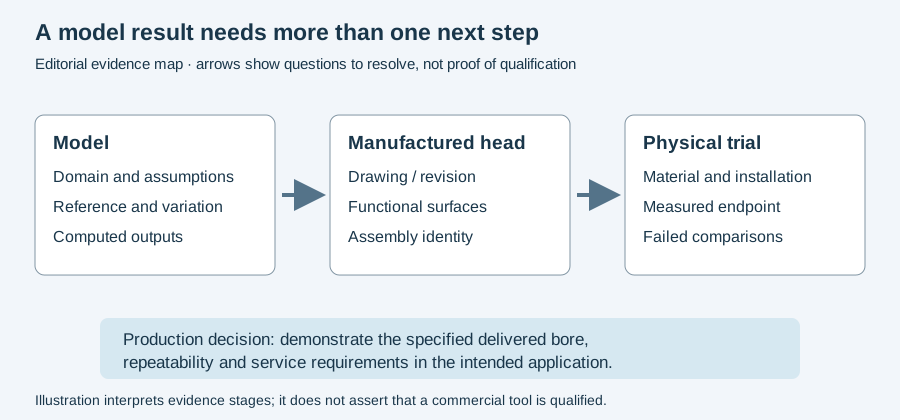
The model-to-trial diagram below separates computational output from manufactured and measured evidence. The review invitation is for a qualified contributor to examine a defined interpretation; it is not a substitute for the original dataset. The next readings show how the correction is carried into the white-layer and BTA-model discussions.
Revision note
October 8, 2026: revised the technical explanation and connected reading after source review. Original publication date and URL retained.