IFW at Leibniz University Hannover announced its collaboration with ISF at TU Dortmund on the DFG-funded dynoSpan project on April 23, 2026. The proposed single-lip gun-drill concept uses a CFRP tube in place of a metallic shaft. The announcement describes a modular design and a planned interface with the metal drill head. English announcement; German original.
The design question behind the announcement
The project seeks to address unwanted vibration through the shaft’s damping properties and composite arrangement. This is the research objective stated by the institutes. The public announcement read for this article does not provide a comparative production dataset establishing a tool-life increase or a bore-quality improvement.
That distinction matters when the material is cited in a machining proposal. A design intended to reduce vibration and a qualified tool for a particular component are different stages of evidence.
What a useful follow-up would contain
Our editorial follow-up would look for the tested tool configuration, reference design, workpiece material, machine arrangement and measured responses. A comparison should make clear whether it concerns vibration, finished-hole geometry, surface condition or tool wear. These are proposed reading criteria, not additional project findings.
The announcement’s modular concept is also a reason to preserve configuration details: results from one assembled variant should not silently become a claim for every variant.
For background on the machining method, read what gun drilling is. The CFRP shaft technical page collects the broader evidence question. This brief records the dated project announcement; it does not present the concept as a commercially qualified replacement.
Editorial policy and corrections.
CFRP describes the shaft, not the drilled component
The IFW project description proposes replacing the metallic shaft with a CFRP tube. It discusses hybridization at the metal-head interface, internal fluid channels, additive manufacture of the head and a modular construction. The subject is a tool structure; the announcement is not a trial showing how to drill a CFRP workpiece.
The proposed interface is part of the research question. A shaft material alone cannot describe the complete tool’s response when the cutting head, connection and fluid path also change. Any later comparison needs to identify the assembled configuration whose observations are being reported.
What a result would have to connect
Our reading framework links structural design to observed vibration, tool condition and finished-bore measurements. The project announcement sets objectives for those relationships. It does not publish a completed matched comparison from which this site could quote a production improvement.
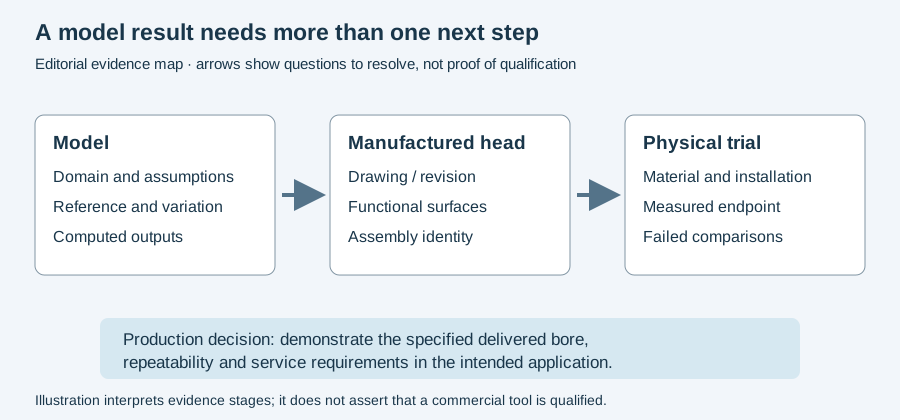
The model-to-trial figure below therefore shows separate evidence stages. A genuine future case can be submitted with its test conditions and measured results through the case tool. The next readings connect the proposed CFRP shaft architecture to the separate investigation of chatter in gun drilling.
Revision note
October 8, 2026: revised the technical explanation and connected reading after source review. Original publication date and URL retained.