Cast iron deep hole drilling includes more than one tool architecture. Gühring’s VB80 and VB100 announcement describes tools for cast materials with a cutting arrangement that differs from the single-lip gun drill used elsewhere on this site. The material name alone does not identify the process.
A named cast-iron design
Gühring’s August 7, 2024 product article describes the VB80 with a steel body, straight flutes and a brazed carbide head. Its stated arrangement uses two inner cutters and four outer cutters. The VB100 is discussed in relation to pilot and stepped holes.
These are manufacturer descriptions of named products. The article’s productivity and service-life claims do not create a controlled comparison against every gun drill. Tool architecture, application and the basis of comparison need to remain beside any quoted performance claim.
Cast-iron guidance also separates materials
The German foundry association’s machining guide discusses drilling in its nodular-cast-iron section and treats austempered ductile iron separately. Its tool and drilling-cycle discussion does not turn a twist-drill depth range into a limit for all deep-hole methods.
The botek single-flute catalogue likewise divides grey and nodular cast iron into strength-related recommendation groups. Reading a cast-iron row therefore requires both a material designation and the relevant table heading.
A comparison needs the same finished feature
For an application comparison, begin with the actual bore task: its diameter, depth, starting geometry and acceptance characteristics. Then identify the complete tool and cycle used to produce it. Otherwise a pilot-hole operation may be compared with solid drilling, or one manufacturer’s cutter arrangement may be treated as a generic category.
This is editorial analysis of how to use the sources, rather than a ranking of the tools. None of the cited material provides an independently checked head-to-head test covering all cast-iron grades and both architectures.
Follow the physical feature through the record
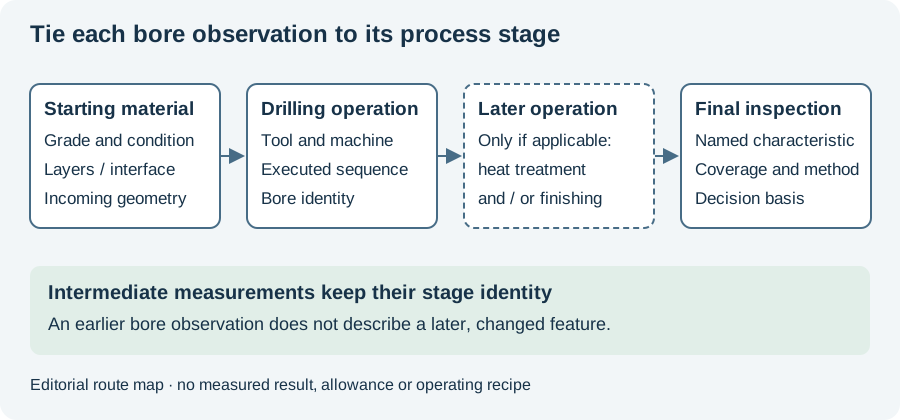
The process specification worksheet can retain the material grade, pre-existing hole state and proposed operation. It is especially useful when asking whether the task starts from solid material or a pilot hole. Once the operation is defined, the bore-quality record should name the acceptance characteristic and measurement locations.
The diagram below joins the identified material and operation to that inspection stage. Continue to cutting-tool materials for the tool-selection evidence, or the method comparison for the supply and chip-return architectures. Those pages help make the comparison explicit before assigning a claimed speed or tool-life figure to the cast-iron job.
Revision note
October 8, 2026: revised the technical explanation and connected reading after source review. Original publication date and URL retained.