4140 gun drilling comparisons need the material’s supplied condition. The steel name is a starting point; it does not identify the heat treatment, specimen history or the drilling tool used in a published experiment.
A complete original study used 4140 plus a specified condition
Strodick and colleagues’ Production Engineering paper examines rolled AISI 4140+QT, also identified as 42CrMo4+QT. Its two material batches were tempered at 640°C and 680°C. The machining used a 60 mm botek Type 12 BTA tool.
Those details belong together. The study is relevant to understanding material state and surface integrity, but it is not an experiment with a small single-lip gun drill. Its operating inputs cannot be renamed as a 4140 gun-drilling recipe.
Cutting and guide contact were separate research questions
The paper investigates the interaction of cutting and burnishing and examines sectioned specimens. Its discussion of near-surface change shows why an overall roughness number is not a complete description of the wall.
The linked surface-integrity article explains those observations and retains the later figure-correction context. For this material page, the key is to distinguish what was machined from what was measured: tool architecture and material batch on one side, localized wall evidence on the other.
What adjacent steel experiments can add
The DEW/TU Dortmund machining brochure reports deep-drilling comparisons in 18CrNiMo7-6 and 20MnCr5 with different sulphur contents. It connects chip formation and wear with bore observations. Those are different steel grades, so their settings and outcomes remain attached to their own specimens.
Read together, the sources suggest a useful comparison discipline: retain the material description even when the article’s main topic is tool wear or surface quality. A table headed only “steel” can conceal a difference that the original study deliberately preserved.
The next useful record is a matched gun-drilling trial
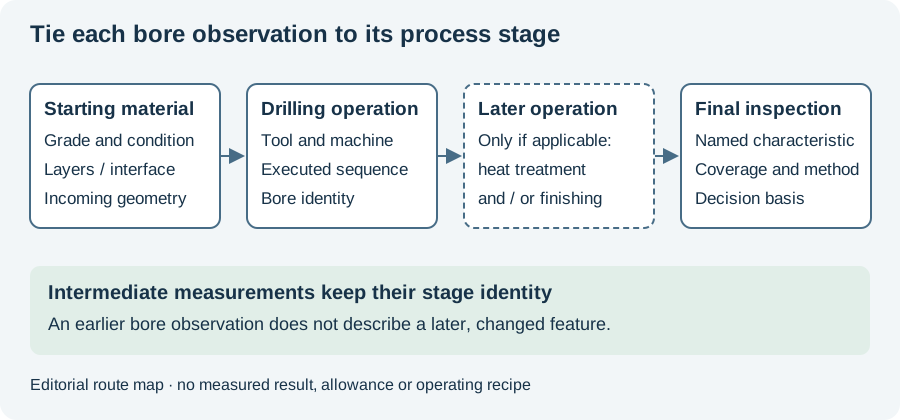
For a 4140 application, record the supplied condition and the actual gun-drill configuration before choosing a response. Tool wear, evacuation behavior and a finished-bore characteristic each need an identifiable observation. Use the quality worksheet when the decision concerns acceptance, and retain any process observations under the same bore ID.
The figure places the material condition at the beginning of that chain. Continue to the existing surface-integrity reading for the BTA experiment’s wall evidence, or gun-drilling speeds and feeds for the distinction between a tool-maker’s recommendation and a physically checked operating combination.
Revision note
October 8, 2026: revised the technical explanation and connected reading after source review. Original publication date and URL retained.