A secondary operation should have an identified task: remove material, form a surface or deliver another named feature. Calling all of them “finishing” hides which characteristic is expected to change and which incoming condition the operation needs.
A documented cutting-and-forming example
ECOROLL’s English cylinder-processing page describes skiving and roller burnishing in a combined tool or as separate operations. Its German article dated October 17, 2024 explains the cutting stage followed by plastic working of the remaining surface texture.
These are explanations of the manufacturer’s offered construction. Their productivity claims do not establish a universal cycle advantage over another finishing route. The useful architectural distinction is the different work performed by the cutting and rolling stages.
The incoming path can remain a constraint
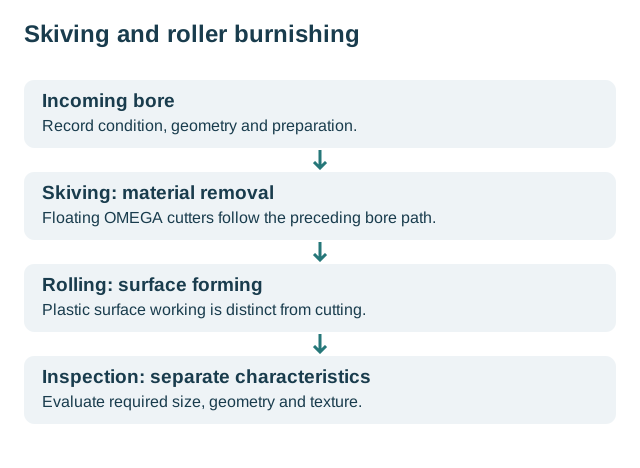
The German article describes the OMEGA cutters as floating and following the prior bore, so they do not sustainably change deviations in that prior path. A changed diameter or smoother local surface therefore cannot be taken as proof that the same arrangement corrected the earlier bore path.
The stages diagram below retains that distinction. It is an explanatory sequence, not a tool drawing or a stock-allowance prescription. Tool-specific incoming requirements and access arrangements still belong to the selected process proposal.
Assign the remaining drawing questions
For an explicitly assumed route, drilling supplies an intermediate opening and later operations are proposed for a final size and texture. Identify those tasks separately from any outstanding axis-related requirement. If the proposed finishing arrangement does not address the latter, obtain an appropriate route or inspection resolution rather than marking the drawing complete by implication.
Keep the incoming and delivered reports as different component states. Where material is removed or the surface is plastically worked, the earlier reading does not report the resulting surface. The final inspection needs to identify the state it actually evaluates.
Compare complete routes
A drilling-only offer and an inspected finished-part offer have different scopes. Retain material responsibility, intermediate acceptance, transport or fixture transfers and the final report alongside the named operations. If a later supplier receives an incoming-bore requirement, identify who checks it and how a mismatch is handled.
The worksheet helps assign each required characteristic to its operation and evidence. Continue to the skiving introduction for that construction or to measurement methods for the final evaluation. No universal corrective capability, machining allowance or finished-bore tolerance is inferred from the word “secondary.”
Revision note
October 8, 2026: revised the technical explanation and connected reading after source review. Original publication date and URL retained.