A diamond-versus-carbide comparison starts with more than contact-element material. It needs to identify whether the element slides or rolls, how it is supported and which surface the assembly can reach.
A documented contact distinction
Baublies’ technical explanation describes a fixed spherical diamond sliding over the surface, in contrast with rolling elements. Its account connects that construction to local profile forming. This is a supplier explanation of contact architecture, not an inspected performance comparison between every diamond and roller tool.
ECOROLL’s HG overview describes another rolling arrangement with a ball and identified supply configurations. A ball, a mechanically supported roller and a fixed diamond are distinct assemblies. Calling all three a “hard contact” loses the support and motion being compared.
Identify the actual supplied element
Retain the element material from the specific tool documentation. The word “roller” does not establish that every supplied roller is carbide. Likewise, a diamond label does not specify the holder’s compliance, force arrangement or accessible contour.
A large-bore reach claim should identify the proposed holder and processed region. The public contact explanation does not establish complete access to an arbitrary deep bore.
Use a matched surface evaluation
As an editorial comparison, retain the incoming material condition, surface state and region, then record the specified parameter and evaluation method for the result. If preparation also differs, describe the combined route change rather than isolating a contact-material effect.
A smoother local texture result is separate from a dimensional or material-property result. It cannot supply an unmeasured residual-stress profile, fatigue outcome or complete bore geometry.
Move from a label to an application trial
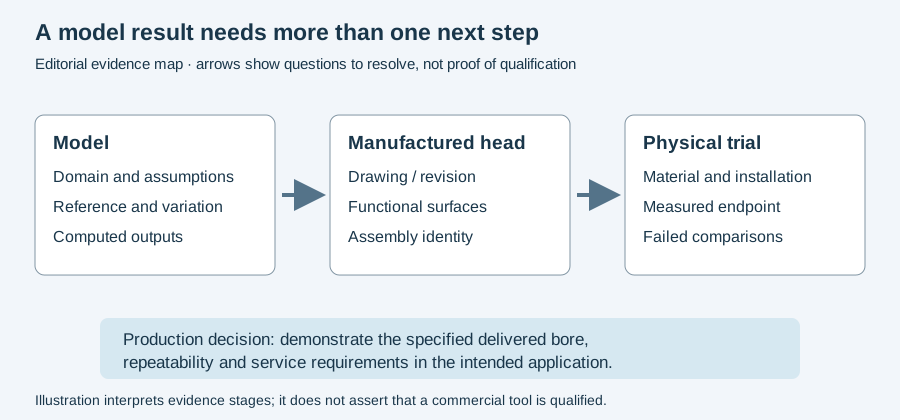
The model-to-trial diagram below connects a documented proposal to independently identified results; it contains no measured tool ranking. Compare the entire preparation, processing and inspection scope when assessing cost or accepted output.
Use the technical-review proposal to define an expert comparison of the documented construction and evaluation scope. Continue to surface integrity for the distinction between texture and subsurface evidence, or hydrostatic rolling for the specific HG architecture. No universal diamond or carbide advantage was verified in this review.
Revision note
October 8, 2026: revised the technical explanation and connected reading after source review. Original publication date and URL retained.