A lathe-based skiving and burnishing proposal needs the complete tool route. Existing turning capability does not establish the holder, bore access and control arrangement for the proposed finishing tools.
A stated separate-tool concept
ECOROLL’s cylinder-processing page describes short-cylinder machining on a lathe using a skiving head followed by a separate rolling tool after an automatic tool change. This identifies a supplier concept; it does not establish compatibility with every CNC lathe or bore.
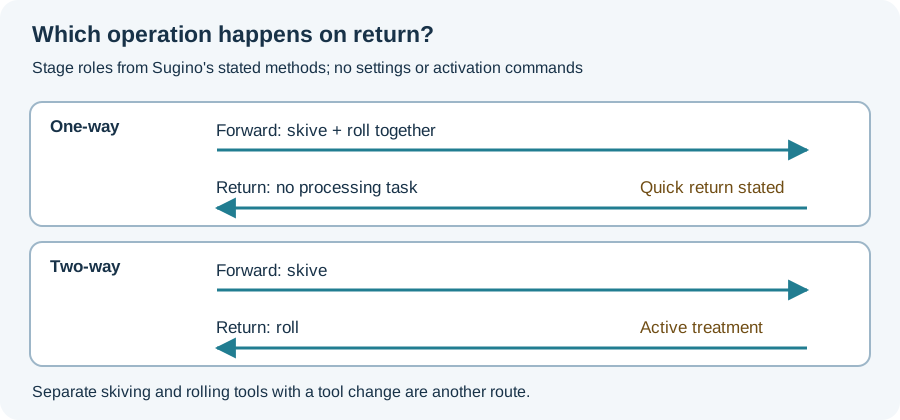
The cycle diagram below also shows a combined-head alternative with active rolling on return. Keep those arrangements distinct. Two different tools and one combined head with two active directions require different equipment and timing records.
Review both tool positions
Identify the offered mounting, tool projection and part location for each operation. A satisfactory cutting-tool layout does not establish clearance or access for the subsequent roller tool. Retain the transfer of the bore reference across the tool change and any changed component location.
Check the proposed operating quantities against the configured machine and the selected tool documents. A generic lathe spindle specification does not supply a complete application approval, and a catalogue length ratio should remain within its stated concept.
Keep the intermediate state useful
For an assumed trial, retain the incoming bore and the result after cutting before evaluating the delivered rolled surface. That distinguishes a preparation mismatch from a later surface result. If an intermediate observation is omitted, record the resulting investigation limit rather than reconstructing it from the final bore.
Compare complete delivered cycles
Include locating, both operations, tool change, return, handling and the agreed inspection boundary. An isolated cutting interval cannot be used as the whole lathe cycle. A dedicated-machine alternative should use the same delivery boundary before comparing accepted output or cost.
The RFQ worksheet retains the actual machine and supplied tool arrangement. Continue to setup for control and support relationships or the cycle comparison for the forward/return distinction. No universal depth limit or lathe cycle-time advantage is assigned here.
Revision note
October 8, 2026: revised the technical explanation and connected reading after source review. Original publication date and URL retained.