A hydraulic cylinder bore has a functional surface requirement as well as dimensional and geometric requirements. A process proposal should retain what the drawing asks the delivered surface to do, rather than selecting the lowest displayed roughness number.
Read the process offer beside the surface requirement
ECOROLL’s cylinder article describes the interaction between cylinder function and its finished surface, then explains skiving and rolling stages. Gehring’s honing explanation discusses functional surface topography and intersecting honing traces. These are different published process accounts, not a matched cylinder trial.
Retain the specified texture parameter, structure or other examination with the actual drawing reference. A scalar roughness result cannot silently replace another stated functional-surface requirement.
Carry the incoming geometry into the route
The ECOROLL article says its floating skiving construction follows the previous bore. A proposal to produce final size and texture therefore needs to identify how any outstanding path-related requirement is handled.
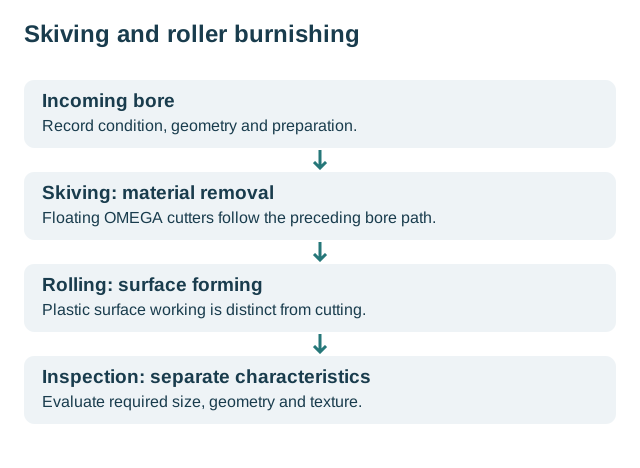
The stages diagram below links supplied bore, material removal, rolling and final inspection. Identify whether preceding drilling or another preparation operation belongs to the offer. Two proposals starting from different supplied conditions do not describe the same cylinder route.
Retain the processed region
Show the actual ends, interruptions and required finishing length in the proposal. A general cylinder-tool capability does not establish which regions of that component can be processed and inspected. Record any unresolved end-region access before declaring the delivered bore complete.
As an editorial example, acceptable local texture at an accessible station and a diameter report at another station answer separate questions. Neither observation provides a missing full characteristic evaluation by implication.
Review the delivered report
Connect the final size, geometric and surface results to their feature identifiers, regions and evaluation methods. Identify the component state after all specified finishing. An earlier drilling result remains useful route evidence but does not report the final surface.
Use the bore-quality worksheet to map the required results. Continue to SRB versus honing for the process comparison or measurement methods for the final evidence. No universal seal-life benefit or cylinder roughness target is inferred from these manufacturer explanations.
Revision note
October 8, 2026: revised the technical explanation and connected reading after source review. Original publication date and URL retained.