A mark found in the finished bore does not identify which stage produced it. A useful investigation preserves the component state and cycle interval associated with the observation before assigning a corrective action.
Distinguish the observable states
| Observation | Evidence route to retain |
|---|---|
| Incoming geometric mismatch | Supplied condition, measurement locations and required preparation |
| Unprocessed region after cutting | Actual head/access arrangement and regional observations |
| Final texture outside requirement | Parameter, evaluated region and state before/after rolling |
| Damage noticed after return | Detection time, actual cycle and tool-control record |
These are editorial investigation routes. They are not a universal cause-and-remedy table. Finding a defect after return establishes when it was detected; without intermediate evidence, it does not establish when it originated.
The selected control arrangement matters
ECOROLL’s OMEGA page describes retracting cutting and rolling elements to avoid damage during withdrawal. It also distinguishes two control arrangements. Compare the event with the applicable assembly documents and actual records, rather than combining another system’s pressure sequence into a new remedy.
A tool-control indication is an observation of that control channel. It does not independently establish every element’s physical state or the resulting bore condition.
Check the incoming limitation
The manufacturer’s cylinder article says its floating cutters follow the prior bore. If the investigation concerns the bore path, keep the incoming geometric evidence open alongside the finishing result. A smoother region after rolling cannot resolve an unmeasured axis-related characteristic.
Record a comparison and its release endpoint
Identify the condition changed and evaluate the required finished characteristics. In an assumed rerun where the tool and setup both change, acceptable output supports the combined condition. It does not isolate the original contributor.
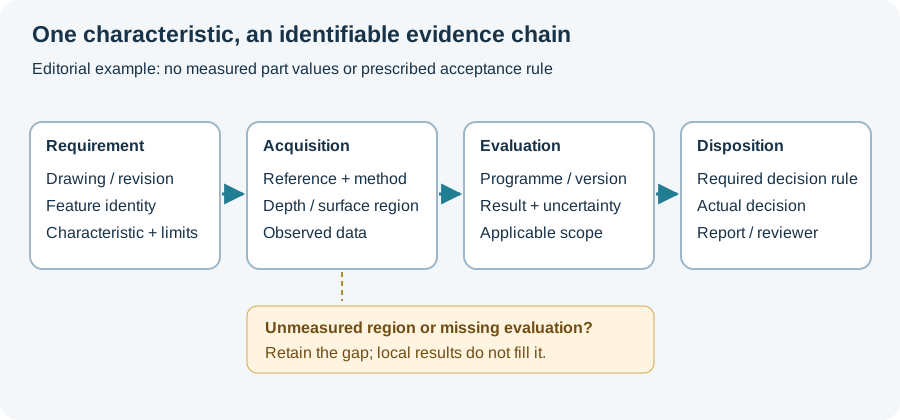
Retain unresolved causes separately from the part’s actual disposition. The incident worksheet connects event identity and comparison; the report-chain figure connects the inspected result to the required decision. Continue to setup for circuit identity or measurement methods for the available coverage. No unverified speed reduction, pressure adjustment or restart instruction is prescribed here.
Revision note
October 8, 2026: revised the technical explanation and connected reading after source review. Original publication date and URL retained.